
Written by: Kate Zusmann
Most trouble on a first trip to Rome comes from a short list of things visitors usually learn while standing in the wrong line: a ticket that had to be booked weeks earlier, a church that turns away bare shoulders, a taxi that ignores the fixed airport fare. We have lived in Rome for more than ten years, and these are the 29 things we tell friends before their first trip, checked against the rules in force in November 2026.
Americans still don’t need a visa for a stay of up to 90 days in any 180-day period across the Schengen area, and Italy is part of it. Your passport has to be valid for at least three months after the day you plan to leave the Schengen area, and it must have been issued within the previous ten years. Airlines check this at check-in, so a passport that expires early next year can be a problem for a trip this winter.
Since April 2026 the EU’s Entry/Exit System (EES) has been fully in place. It registers non-EU travelers with fingerprints and a face photo at their first border crossing, and the old passport stamp is gone. Allow extra time at passport control at Fiumicino, especially if you connect from another Schengen airport. ETIAS, the online travel authorization with a fee, was still not in operation in November 2026. Check the official EU ETIAS site before you book, because some unofficial sites already sell “ETIAS applications” that cannot be used yet.
Spring and fall are the easiest months for walking the city: April, May, September and October. On April 21 Rome celebrates its birthday with a historical parade and events across town. Winter is mild but wet, and the lines are shorter. In July and August the afternoon heat often climbs past 95°F (35°C), and the stone of the historic center keeps it well into the evening. In summer we go out at dawn, stay indoors through the hottest hours, and walk again after sunset. On the hottest days the beaches near Rome are a short train ride away. Our weather and packing guides by month show what to expect for each part of the year.
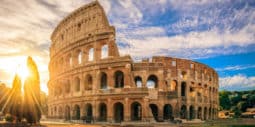
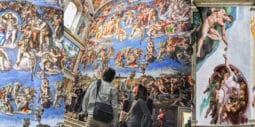
These two sell out first. A Colosseum ticket carries the visitor’s name and a timed slot for the amphitheater, and staff check ID at the entrance, so book under the names of the people who will actually go. Sales open about 30 days before each date. Our step-by-step guides cover buying Colosseum tickets and booking the Vatican Museums, including the official sites and the resellers that charge extra for the same entry.
On the first Sunday of the month, state museums and sites in Rome are free, including the Colosseum and the Pantheon. You can’t reserve: free tickets are handed out on the day, first come, first served, and the lines are long. At the Colosseum the arena and the underground stay closed on free days. The Vatican Museums run their own free day on the last Sunday of the month, in the morning only, and it is the most crowded day of their calendar.
A free Sunday makes sense if you are in Rome for a week and can go early. On a three-day trip, paying for a timed ticket buys back half a day. Here is the full list of museums that are free on the first Sunday.
St. Peter’s Basilica, the Sistine Chapel and the Pantheon (a consecrated church) all require covered shoulders and knees, and the rule applies to men too. Guards at St. Peter’s do turn people away. A light scarf in your bag solves it in ten seconds.
Rome’s streets are paved with sampietrini, small basalt blocks with gaps between them. Thin soles and heels suffer on them. Italy uses Type F and Type L sockets at 230 volts. Phone and laptop chargers usually handle the voltage, so a plug adapter is enough. Hair dryers and straighteners from the US usually aren’t dual-voltage.
Your neighborhood decides how much of the day you spend on transport. For a first trip we suggest the area between the Pantheon, Piazza Navona and Campo de’ Fiori: you can walk to most of the major sights, and the Vatican is across the river. Here are our hotel picks near the Pantheon. Termini has the cheapest rooms and the best connections, but the streets around the station are the least pleasant part of the center at night. Trastevere is lively in the evening and loud for the same reason. Our guide to choosing a hotel in Rome compares the main districts.
From Fiumicino (FCO), the Leonardo Express runs nonstop to Termini in about 32 minutes. The regional FL1 line is slower but stops at Trastevere, Ostiense and Tiburtina, which can be closer to your hotel. Taxis charge a fixed fare from the airport to any address inside the Aurelian Walls, which covers almost the whole historic center. You can check the current amount in our taxi fares calculator.
With luggage, children or a late flight, a private transfer with a driver waiting in arrivals is the calmest option. We have used Sergio’s service (rome4.us) for years. Step-by-step routes: Fiumicino to the city center and Ciampino to the city center.
A licensed Rome taxi is white, has a TAXI sign on the roof, the Roma Capitale logo and a license number on the door, and a meter inside. Ignore anyone who approaches you in the arrivals hall offering a ride. Take a car from the official taxi rank outside. One trap: some white taxis at Fiumicino are licensed by the town of Fiumicino, not by Rome, and they are not bound by Rome’s fixed fare. Ask “tariffa fissa?” before you get in.
You don’t need a paper ticket anymore. Tap a contactless Visa or Mastercard, or a phone with Apple Pay or Google Pay, on the red readers at metro gates and on buses and trams. ATAC’s tap&go system caps what you pay in a day at the price of a 24-hour pass, as long as you use the same card or phone every time. One card pays for one person, so each traveler in your group needs their own. Tap&go doesn’t work on the Leonardo Express or on regional trains. For multi-day passes and the paper options, see how to buy public transport tickets.
Rome has only three metro lines, and none of them crosses the old center between the Pantheon, Piazza Navona and Campo de’ Fiori. Any tunnel there hits ancient remains, which is why line C has taken nearly two decades to build. The metro is useful for the Colosseum, the Spanish Steps, the Vatican side (Ottaviano) and Termini. For everything else, use buses, trams such as the 8 to Trastevere, or your feet. Our metro guide has the map and the stations closest to the sights.
The center is smaller than it looks on a map. From the Pantheon to the Trevi Fountain is about ten minutes on foot, and from the Colosseum to Piazza Venezia is a straight 15-minute walk down Via dei Fori Imperiali. Walking is also how you find the courtyards, fountains and church doors that no bus passes. If your feet give up, a hop-on hop-off bus links the main sights in one loop.
Most of the center is a ZTL, a limited traffic zone watched by cameras at every entrance. A rental car has no permit, and a wrong turn following GPS produces a fine that the rental company forwards months later, with its own handling fee added. If you want a car for the countryside, pick it up on the day you leave Rome, from a depot outside the center. For Florence, Naples or Venice, the high-speed trains of Trenitalia and Italo are faster than driving. See renting a car in Rome and how to book Trenitalia trains.
Strikes (sciopero) on buses, the metro or trains happen a few times a year in Italy. They are announced in advance, usually last a day, and the law guarantees service during set hours. If a strike falls on your airport day, book a taxi or a transfer early. ATAC and Trenitalia list upcoming strikes on their websites.
Since June 2022, Italian shops, bars and restaurants have been required by law to accept card payments of any amount, and almost everyone in central Rome takes contactless cards. Some small bars, stalls at the farmers’ markets and newsstands still prefer cash for a coffee or a bottle of water, and a card machine that is suddenly “broken” is a familiar Roman excuse. Keep small bills and coins for these moments, for tips, and for church donation boxes.
Don’t change dollars at airport kiosks or exchange offices in the center. Their rates are poor. Use an ATM (bancomat) that belongs to an Italian bank and avoid the standalone machines of private ATM operators on tourist streets, which charge high fees.
Whether you withdraw cash or pay by card, the screen will often offer to charge you in US dollars. Decline and choose euros. That “conversion” (dynamic currency conversion) uses a worse rate than your own bank.
Many restaurants add a coperto, a cover charge per person for bread and the table. It is legal if it is printed on the menu. Some places add a service charge as well, usually in tourist areas. Tipping is not expected the way it is in the US. If you liked the food and the service, rounding up or leaving a couple of euros is generous.
Rome charges every guest a tourist tax per person per night, and it is often not included in the price you see on booking sites. The hotel or apartment host collects it at check-in or check-out. Children under 10 are exempt. How much you pay depends on the type of accommodation, and the full table is in how much the Rome city tax is.
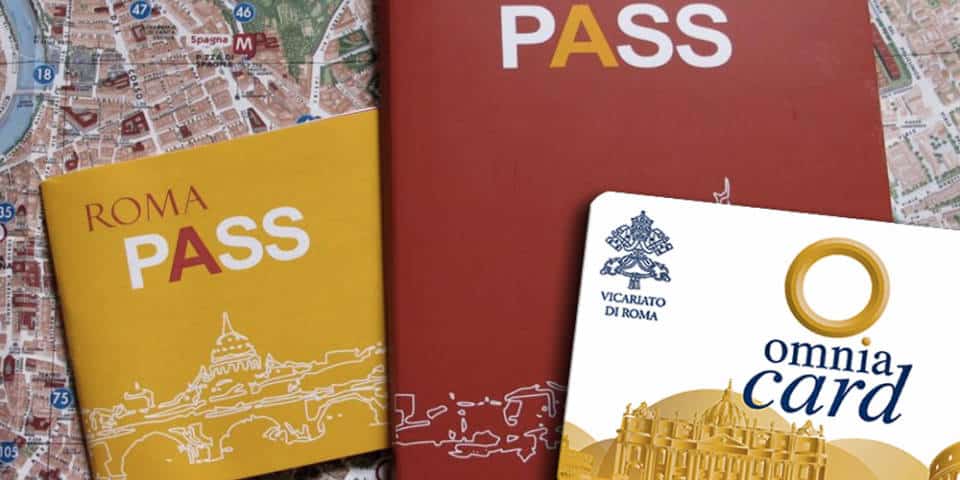
The Roma Pass (48 or 72 hours) combines public transport with free entry to the first one or two museums or sites and reduced prices after that. It pays off if you use transport a lot and visit the more expensive sites first. With tap&go capping your daily fares, and with the Vatican Museums not included at all, many visitors on a short trip spend less by buying tickets one by one. Our Roma Pass guide walks through the calculation.
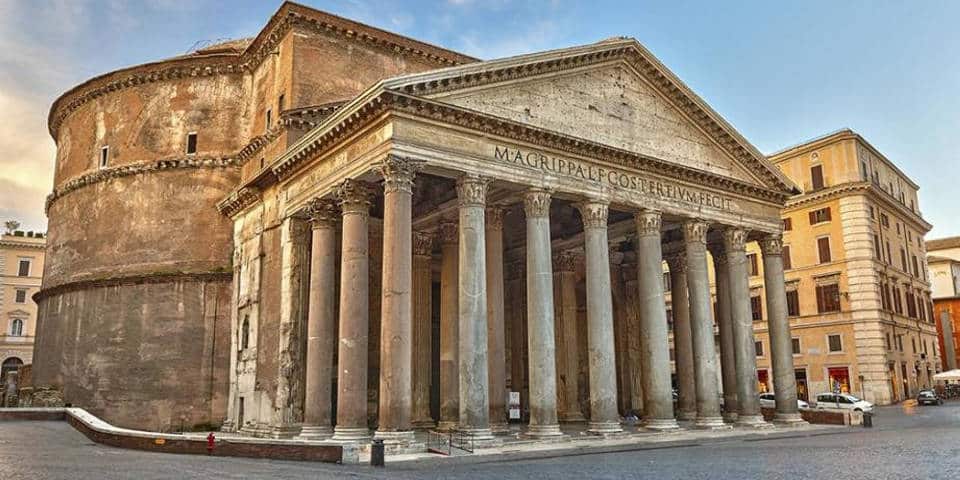
For centuries anyone could walk into the Pantheon, and many guidebooks still say so. Since July 2023 there has been an entry ticket, with timed slots sold online. It remains free on the first Sunday of the month, and you can enter without a ticket to attend Mass, as a worshipper rather than as a sightseer. Inside, look up at the oculus. The 2nd-century concrete dome is still the largest unreinforced concrete dome in the world, and rain falls straight through it onto a floor with small drain holes. More in our Pantheon guide.
Since February 2026, stepping down to the basin of the Trevi Fountain requires a ticket during the day and evening. The square above is still free, and the fountain is open to everyone late at night without a ticket. Residents of Rome and young children enter free. The best time is early morning, before the tour groups, when you can toss your coin with your back to the fountain without elbowing anyone. Read more about the Trevi Fountain.
Since 2019 the city treats the Spanish Steps as a monument, and sitting, lying down or eating on them is banned. Municipal police patrol the staircase and fine people who ignore the warning. The same urban regulations ban climbing into fountains and cooling your feet in them. Use the benches in the nearby piazzas instead.
Most of Rome’s churches are free, and some of them hold works by Caravaggio, Michelangelo and Bernini. St. Peter’s Basilica is free (the climb to the dome is not). So are Piazza Navona, the view through the Knights of Malta keyhole on the Aventine, the Janiculum terrace and the Villa Borghese park. Our lists of free things to do in Rome and free museums have more ideas for a day with no tickets.
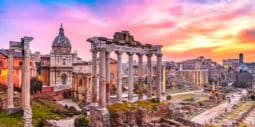
One ticket covers the Colosseum, the Roman Forum and the Palatine Hill, and they sit side by side: plan them as one long morning, and read why the Colosseum is important the night before: the arena makes more sense when you know who built it and why. The Vatican Museums, the Sistine Chapel and St. Peter’s are another full half day across the river. The Pantheon, Piazza Navona, the Trevi Fountain and the Spanish Steps link into one walk. Crossing the city twice in a day is how most first-timers lose time. Our 3-day Rome itinerary puts this into a schedule, and the top 30 attractions help you choose what to add.
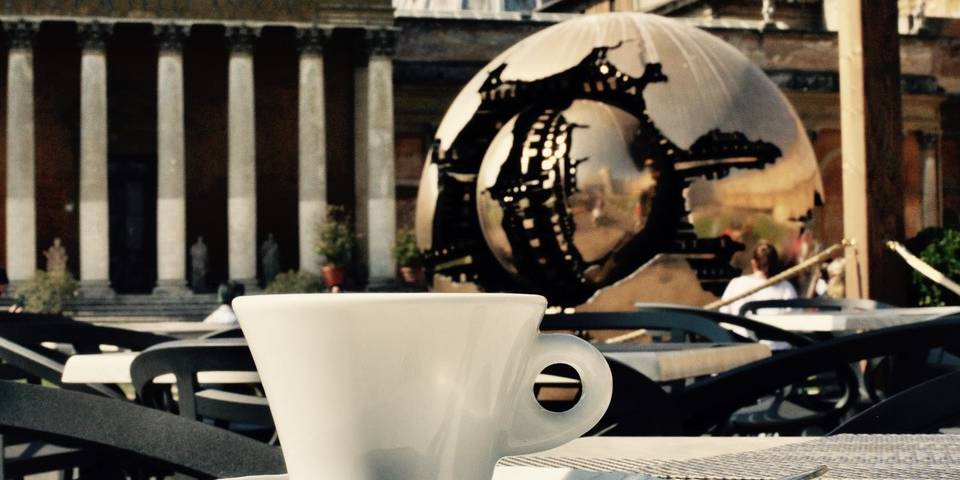
Romans have their coffee standing at the bar counter, and it costs less there than at a table, where you pay for the service. In many bars you pay first at the cash register and then hand the receipt to the barista. Cappuccino is a morning drink, usually with a cornetto, and few Romans order one after 11 am. The barista will still make you one, but now you know why they smile. See our guide to breakfast in Rome.

Lunch runs from about 1 to 3 pm. Dinner starts late: at 7 pm restaurants are empty, and Romans sit down around 8:30 or 9. Many kitchens close between lunch and dinner. If you are hungry at 6:30, do what Romans do and go for an aperitivo, a drink served with snacks or a small buffet. Some bars turn it into an apericena, enough food to replace dinner. Our guide to aperitivo in Rome lists bars we like.
Restaurants with photo menus and staff calling you in from the door cluster around the Pantheon, Piazza Navona and the Trevi Fountain. Prices go down and quality goes up as soon as you leave the square. Trastevere, Testaccio and Monti are where many Romans eat out. Learn the classic dishes before you go, from cacio e pepe to carbonara, with our list of 10 traditional Roman dishes, and for dessert pick gelato stored in covered metal tubs, not piled high in bright colors. Our gelato guide names the shops.
Rome has about 2,800 nasoni, the cast-iron drinking fountains that run day and night, according to Acea, the city utility. What comes out is ordinary tap water and safe to drink. Block the end of the spout with your finger and a jet shoots up from a small hole on top, so you can drink without a cup. In summer a refillable bottle saves you buying water at tourist prices.
Say “buongiorno” (good morning, until mid-afternoon) or “buonasera” (good evening) when you walk into a shop or a bar. It changes how you are treated. Add “per favore” (please), “grazie” (thank you), “scusi” (excuse me) and “il conto, per favore” (the check, please). Most people in the center speak some English, but those first words open the conversation.
Violent crime against visitors is rare in central Rome. Pickpockets are the real problem: on bus 64 to the Vatican, on metro line A, at Termini and in the crowds at the Trevi Fountain. Carry your phone and wallet in a front pocket or a zipped bag, and keep your passport in the hotel safe.
Refuse anything a stranger puts in your hand: a bracelet tied to your wrist, a rose, a “free gift.” Payment is demanded a moment later. Costumed gladiators near the Colosseum also charge for photos. In an emergency, call 112. For a lost prescription or a minor illness, see our guide to pharmacies and first aid in Rome.
If you want one rule from this list, make it the third one: book the Colosseum and the Vatican as soon as your dates are fixed. Everything else you can sort out on the day. When you come back, our list of unusual things to do in Rome goes beyond the classics. And if you would rather have someone plan the days with you, our team can arrange a private tour.
Rome.us © 2026. Created with love by Roman experts and guides.