29357 views
Rome does not need to become an expensive museum marathon. Some of its strongest experiences are public streets, churches, parks, viewpoints, and works of art available without an admission ticket. The important distinction is between a genuinely free visit and a paid attraction that happens to have a free exterior view.
After years of walking these routes, I have selected 30 free things to do in Rome, Italy, that I would recommend to friends. The list explains what costs nothing, what may require a reservation, and which paid extras can be skipped. It also includes several places that reward close looking rather than another ticket queue.
My short version: begin at the Trevi Fountain around 6 am, walk through the historic center while the streets are still calm, enter one or two art-filled churches, and save a park or viewpoint for late afternoon. Use the longer sections below to build the route around your interests and the part of Rome where you are staying.
Central Rome gives you ancient remains and Baroque urban design alongside public fountains and major works of art within walking distance. The streets and squares in this section can fill most of a day without an entrance fee. I have ordered them so that several stops can be joined on foot. Read the free-status notes carefully, since some monuments now charge for their closest viewing areas or excavated interiors.
The Trevi Fountain is now partly ticketed. Since February 2026, non-residents need a ticket to enter the controlled basin area closest to the monument during its paid-access period. The public square and the view from outside that area remain free. I recommend arriving around 6 am, when the city is waking up and the crowd is usually much smaller. Nicola Salvi designed the fountain as the monumental end of the Acqua Vergine aqueduct, with Oceanus standing above the restless stone and water.
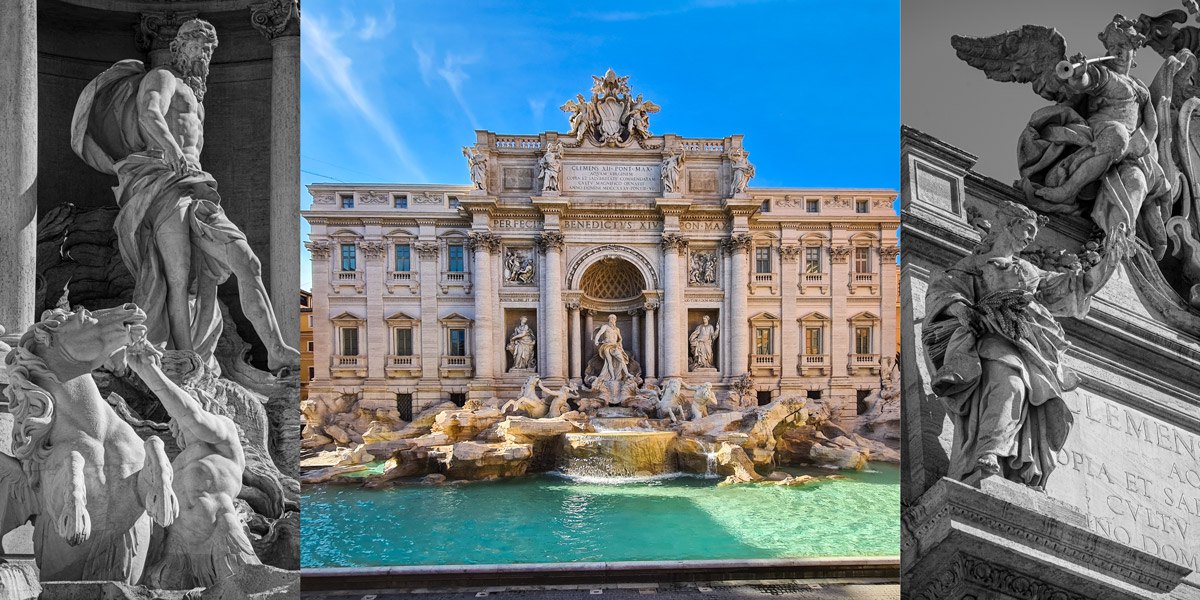
Trevi is the opening stop in our recommended early-morning route through Rome’s main attractions. Access arrangements can change for maintenance or crowd control, so check the current rules if you want to enter the lower basin.
The Galleria Sciarra stands about two minutes from Trevi, yet its entrances resemble ordinary office passages. Inside, four painted levels rise below an iron-and-glass roof. Giuseppe Cellini completed the decoration in 1888 using an encaustic technique. The program, devised by Giulio Salvadori, presents female virtues and stages of domestic life rather than unrelated ornamental figures.
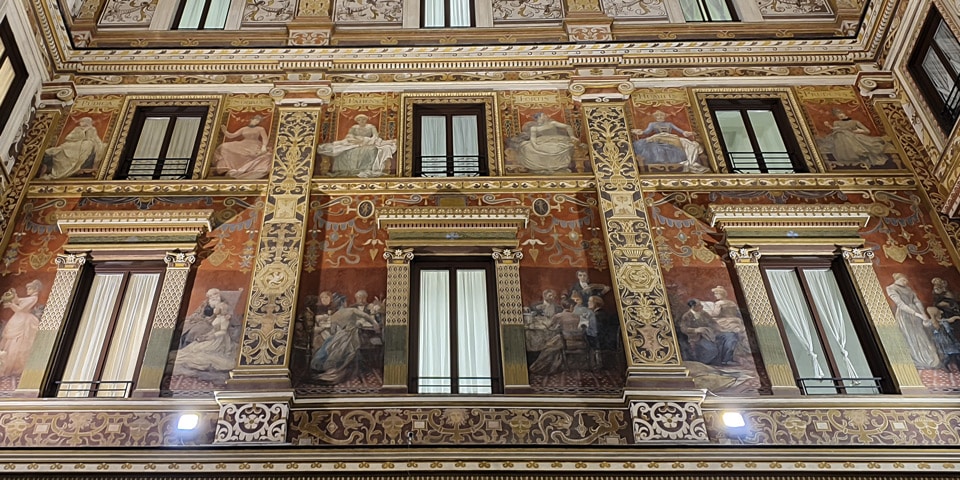
The passage is free while its privately controlled gates are open. Look for the initials CCS, referring to Carolina Colonna di Sciarra, and the Virgil quotations painted on the pillars. That turns a quick photograph into a readable nineteenth-century decorative cycle.
Francesco De Sanctis built the Spanish Steps between 1723 and 1726 to connect Piazza di Spagna with Trinità dei Monti. Walking up the 135 steps is free, and the upper terrace opens a useful sightline across the rooftops. The name comes from the Spanish Embassy near the square, not from the architect or the patrons who financed the staircase.
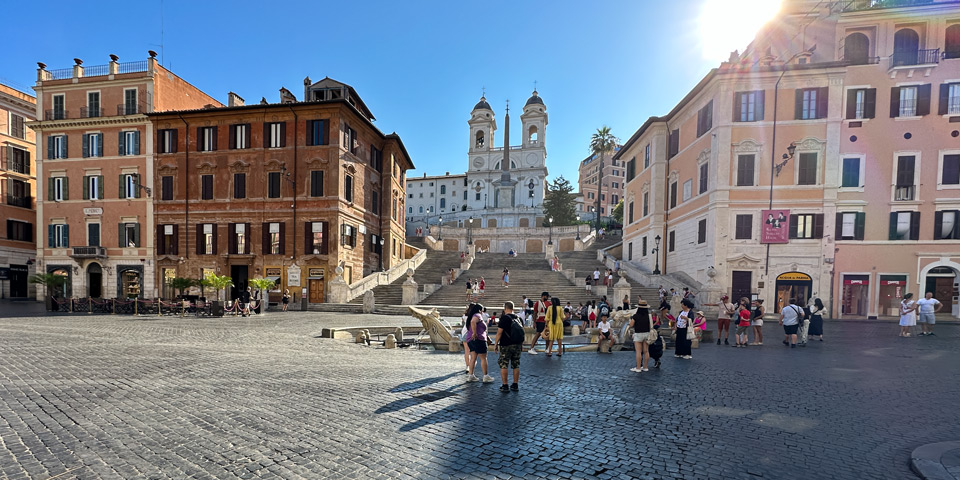
Sitting on the staircase is prohibited, and police enforce the rule. Pause on the terraces without blocking the route, then continue toward the Pincio or Via del Babuino. Early morning gives the clearest view of the staircase’s alternating curves and straight flights.
Piazza Navona still follows the long, curved footprint of Domitian’s first-century stadium. Walk to the rounded northern end and the shape becomes easy to read. The square itself and its three fountains are free to view. At the center, Bernini’s Fountain of the Four Rivers sets personifications of the Danube, Ganges, Nile, and Río de la Plata around an ancient obelisk.
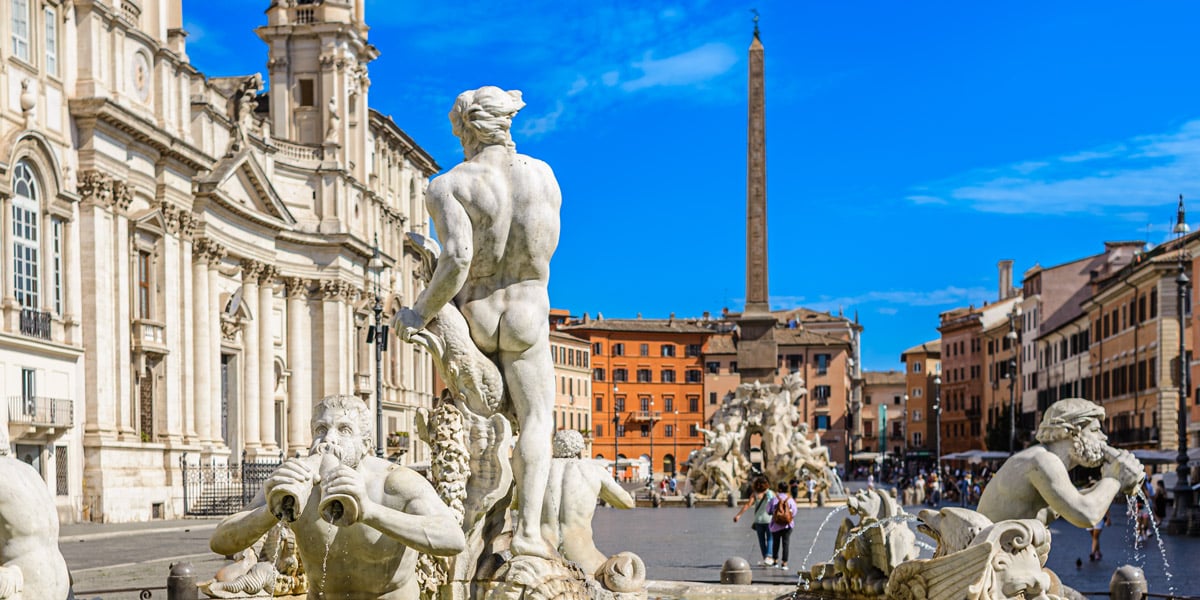
The church of Sant’Agnese in Agone can also be entered without a standard admission ticket when open. Underground remains of the stadium belong to a separate paid visit, so the free experience stays at street level.
Walking along Via dei Fori Imperiali costs nothing and gives elevated views into the forums of Caesar, Augustus, Nerva, and Trajan. Start near Piazza Venezia and use the pavement viewpoints on both sides of the avenue. Trajan’s Column can be studied from the public space, including the spiral band that narrates the Dacian campaigns across roughly two hundred meters of carved relief.
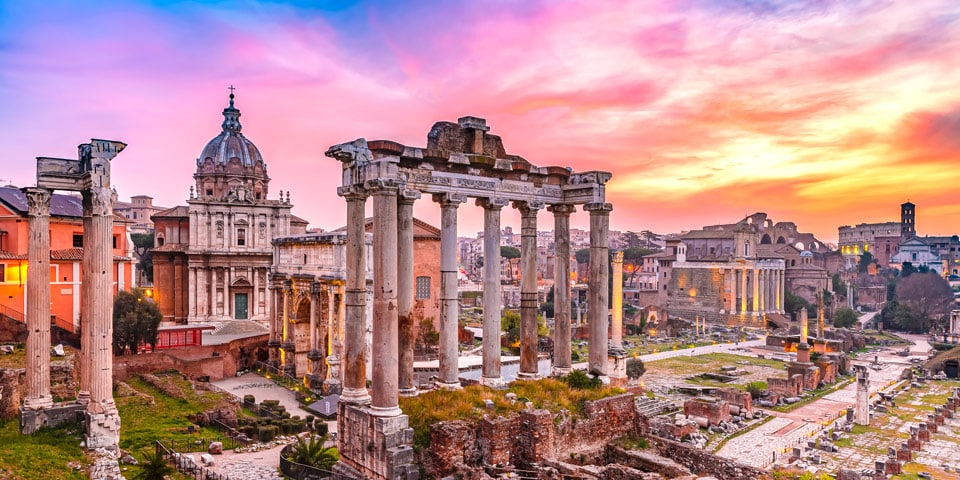
Entry into the excavated areas of the Imperial Forums and the Roman Forum requires a ticket. The free street view works best in angled morning or late-afternoon light, when brick walls and marble fragments become clearer and changes in ground level are easier to distinguish.
The pavement around Largo di Torre Argentina overlooks four Republican temples and part of the complex attached to Pompey’s Theatre. Julius Caesar was killed near the Curia of Pompey on 15 March 44 BC, although the assassination did not take place between the visible temple columns. The square’s cat sanctuary gives the ruins a second, modern identity.
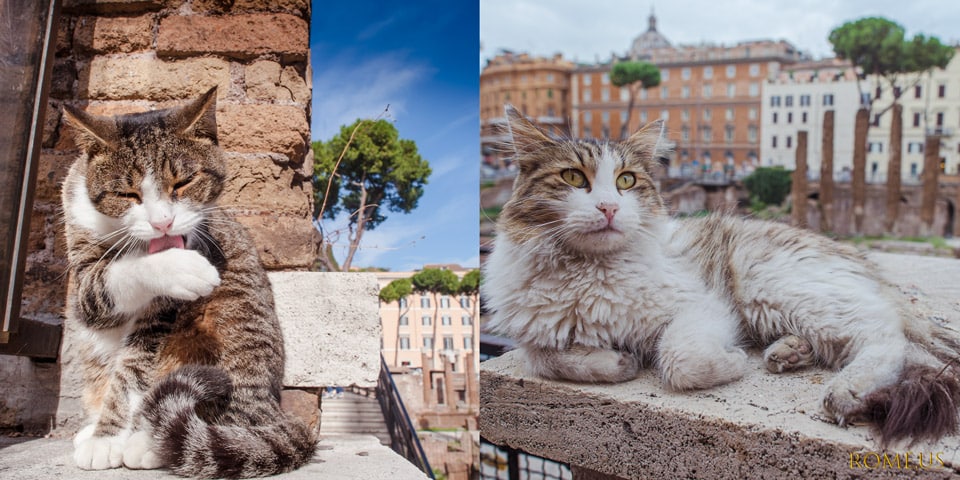
Looking down from the surrounding public pavement is free, while access to the lower archaeological walkway is ticketed. From the corner near the tram tracks, compare the temples’ different plans before continuing to the Jewish Ghetto or Campo de’ Fiori.
Hadrian built the original bridge, then called Pons Aelius, to connect the city with his mausoleum. The present pedestrian crossing, Ponte Sant’Angelo, is free and frames Castel Sant’Angelo at the end of its central axis. Ten angels carrying instruments of the Passion were added to the bridge’s sculptural program in the seventeenth century.
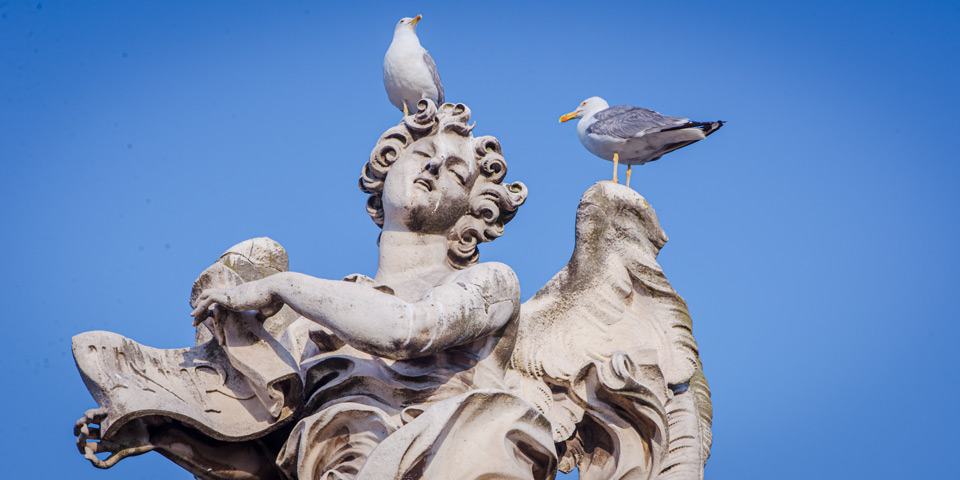
Bernini designed the program, while members of his workshop executed most of the bridge statues. His two original angels, carrying the Crown of Thorns and the INRI inscription, were moved to Sant’Andrea delle Fratte. Crossing near sunset also gives an open view along the Tiber without paying to enter the castle.
Rome’s cast-iron drinking fountains are called nasoni, or “big noses,” after their curved metal spouts. The city began installing them in 1874, and the running water remains potable unless a fountain is specifically marked otherwise. Carrying a reusable bottle can remove a small recurring expense during long walks and summer days.
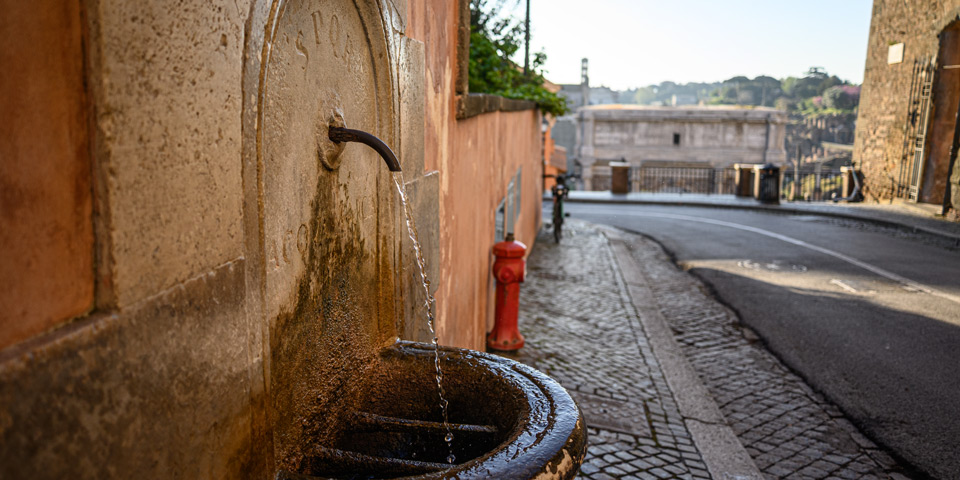
To drink without a bottle, block the main outlet with a finger and the water rises through the small hole on top of the spout. Let it run briefly before drinking, avoid washing food directly against the nozzle, and leave the basin clear for the next person.
Rome’s churches function as places of worship rather than permanent museum halls, yet many contain sculpture and painting that would anchor a major gallery elsewhere. Entry is normally free during public opening periods, but services, private ceremonies, conservation work, and midday closures take priority. Dress for a church, keep voices low, and avoid treating an active chapel as a photo set. These are the five free churches I recommend first, followed by three Vatican and Renaissance experiences.
The Contarelli Chapel in San Luigi dei Francesi holds three paintings by Caravaggio: The Calling of Saint Matthew, Saint Matthew and the Angel, and The Martyrdom of Saint Matthew. Painted around 1599 to 1602, the cycle lets you compare a sudden beam of grace, a concentrated act of writing, and a violent public death within a single chapel.
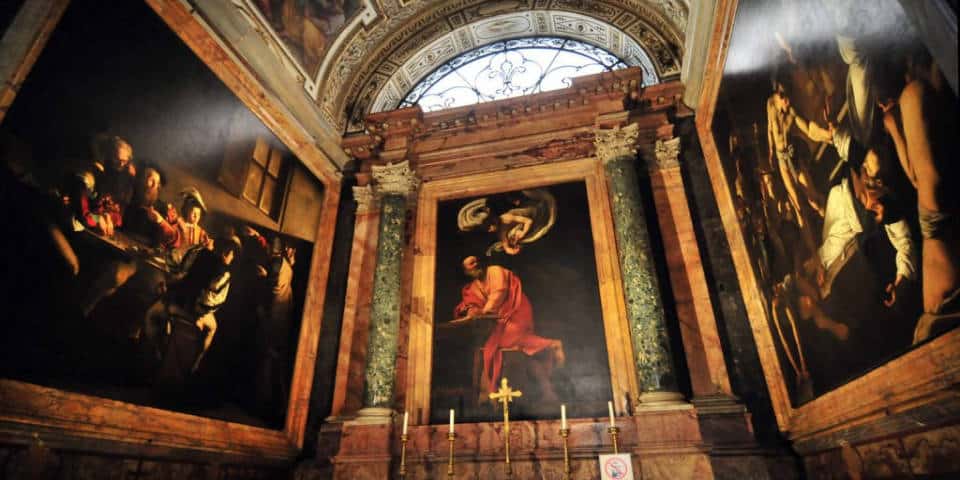
Church entry is free. The paintings are dark, and the chapel illumination may require a small coin. Stand back before moving closer. From a distance, the direction of light connects the three canvases and the chapel’s real architecture.
Sant’Agostino places Caravaggio’s Madonna di Loreto close to Raphael’s fresco of the prophet Isaiah. Caravaggio shows two pilgrims with dirty, swollen feet kneeling before Mary and the child at an ordinary doorway. Their physical fatigue once made the altarpiece controversial and still gives the encounter its force.
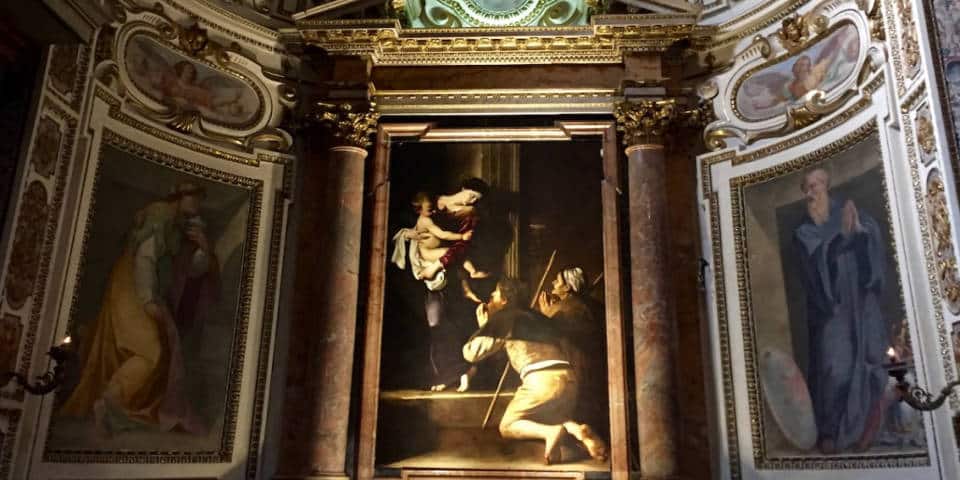
The church also contains Jacopo Sansovino’s Madonna del Parto, long associated with prayers for pregnancy and childbirth. Entry is free during public opening, while illumination boxes may take coins.
Michelangelo’s Moses dominates the monument to Pope Julius II in San Pietro in Vincoli. The sculpture began in 1513, while the reduced wall monument was completed decades later. Follow the movement from the prophet’s tense left leg and compressed beard to his turned head. The horns come from the Latin translation of a Hebrew passage describing rays of light from Moses’ face.
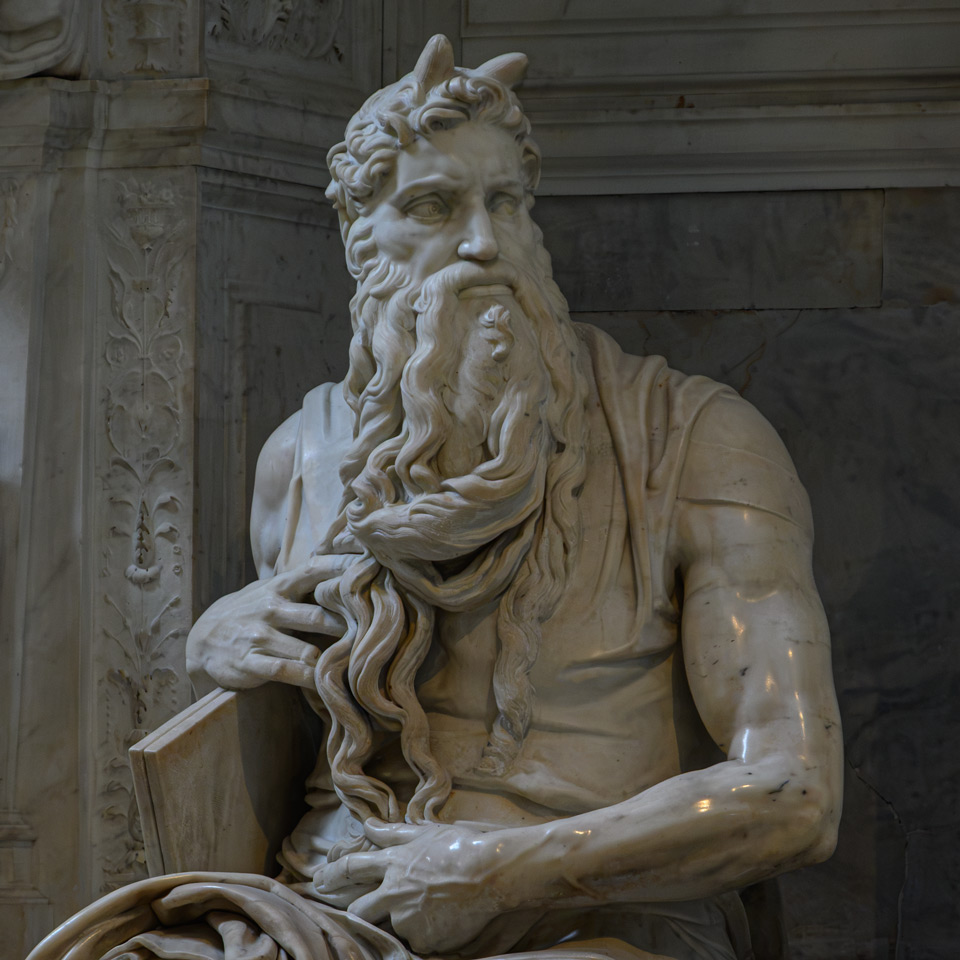
The monument is often called Julius II’s tomb, although the pope was buried in St Peter’s Basilica. The basilica also preserves chains traditionally identified with Saint Peter’s imprisonment. Standard church entry is free.
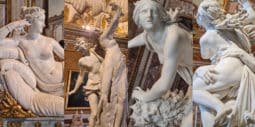
Bernini treated the Cornaro Chapel in Santa Maria della Vittoria as a theater. The Ecstasy of Saint Teresa occupies the center, members of the Cornaro family watch from sculpted side boxes, and concealed daylight falls onto gilded bronze rays above the saint. The architecture directs the viewer before the subject of Teresa’s vision is understood.
Public entry is free during church opening hours. Walk to the center of the nave for the complete spatial effect, then approach the left transept to study the marble textures. A coin-operated light may be needed. Services and funerals can temporarily limit access.
Andrea Pozzo dissolved the ceiling of Sant’Ignazio with painted architecture and figures rising into an imaginary sky. A marked point in the nave gives the intended perspective. Move a few steps away and the painted columns begin to bend, revealing how carefully the illusion depends on one viewpoint.
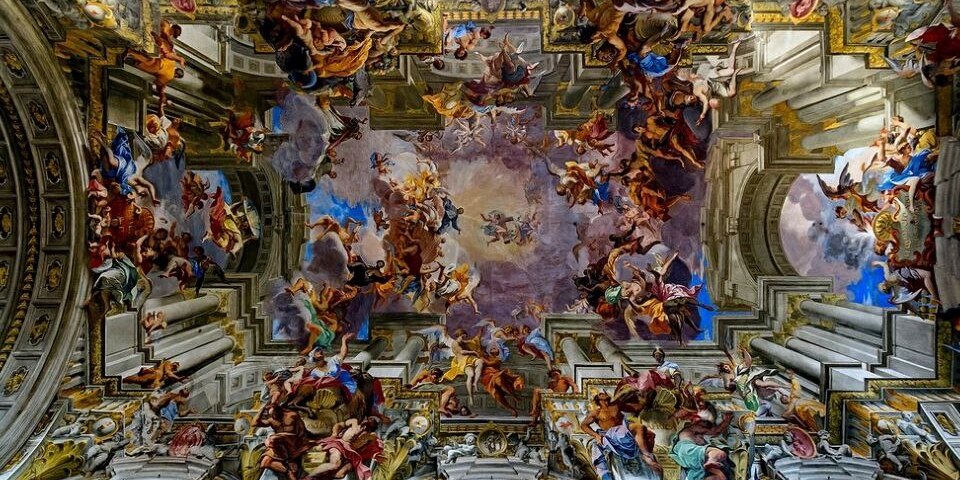
Farther toward the altar, a flat canvas supplies the effect of the planned but unbuilt masonry dome. Free church entry covers both works, while the mirrored viewing platform offered inside may carry a separate charge.
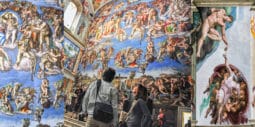
General entry to St Peter’s Basilica is free, although everyone passes through airport-style security. Inside, Michelangelo’s Pietà, Bernini’s bronze Baldachin, and the monument to Alexander VII can be studied without a basilica ticket. The scale becomes clearer if you compare the people below the crossing with the lettering around the dome.
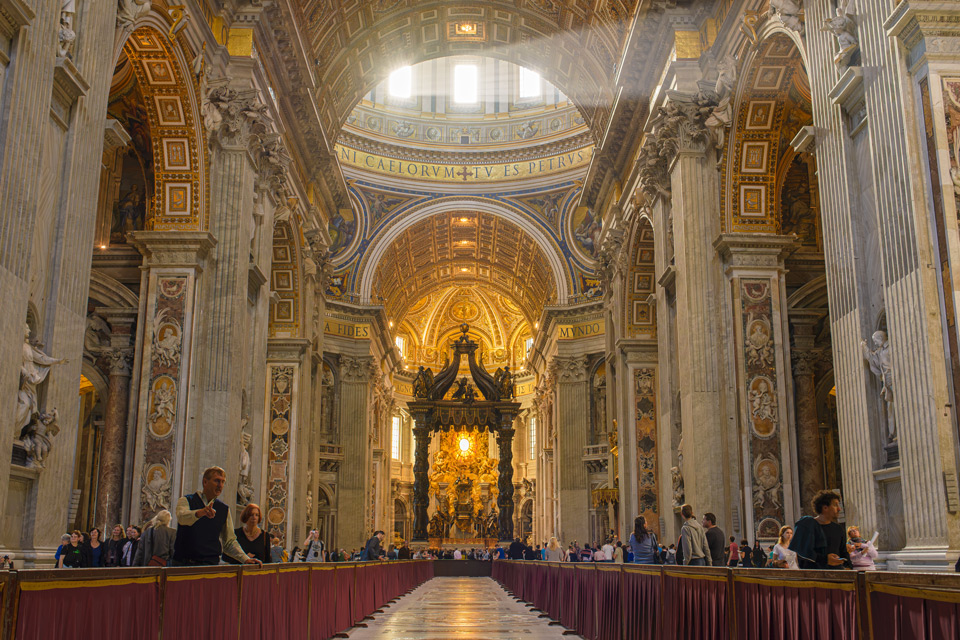
The dome climb, treasury, guided visits, and Vatican Museums are separate paid experiences. Queues are usually shortest early in the morning. Clothing must cover shoulders and knees, and security rules can change during papal ceremonies or major liturgical dates.
Tickets for papal General Audiences are officially free. Pope Leo XIV’s audiences are commonly held on Wednesdays, with the place and schedule set by the Vatican calendar. A ticket does not remove security screening, and popular dates can fill well in advance. Request access through the Prefecture of the Papal Household rather than paying a reseller for the ticket itself.
The event may take place in St Peter’s Square, the Paul VI Audience Hall, or another Vatican setting. Check the official calendar shortly before your visit. Arrival advice depends on the venue and attendance, so a fixed promise about start time or queue length would be misleading.
The Tempietto del Bramante stands in the courtyard beside San Pietro in Montorio. Bramante designed the small circular martyrium in the early sixteenth century for the site then identified with Saint Peter’s crucifixion. Sixteen granite columns surround an interior about four meters across. Its structural clarity is hard to convey in photographs.
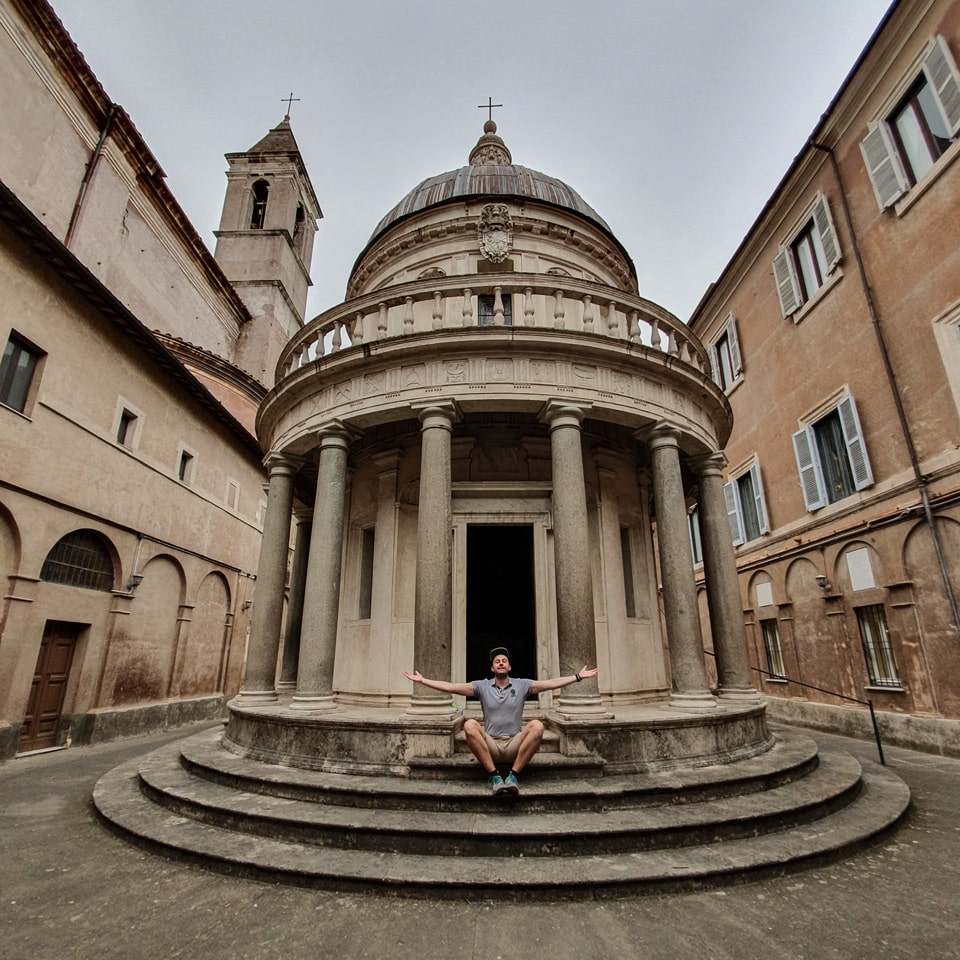
Access through the Royal Academy of Spain complex is free when the courtyard and chapel are open. Check current access before climbing the Janiculum, since institutional events and closures can affect the visit.
The best free places to visit in Rome extend far beyond the historic center. Parks and ridge walks add shade and archaeological landscapes. They also provide the chance to spend several hours without passing a ticket barrier. Distances matter here. Villa Pamphilj, the Appian Way, and the Park of the Aqueducts deserve separate blocks of time, while the Janiculum and Aventine stops combine easily with Trastevere or the river.
Villa Borghese deserves a route rather than a quick picnic stop. Begin at the Pincio Terrace, pass the nineteenth-century Water Clock of Pincio, and continue to the lake and Temple of Aesculapius. The water clock, associated with the Dominican inventor Giovanni Battista Embriaco, has stood in its fountain setting since 1873.
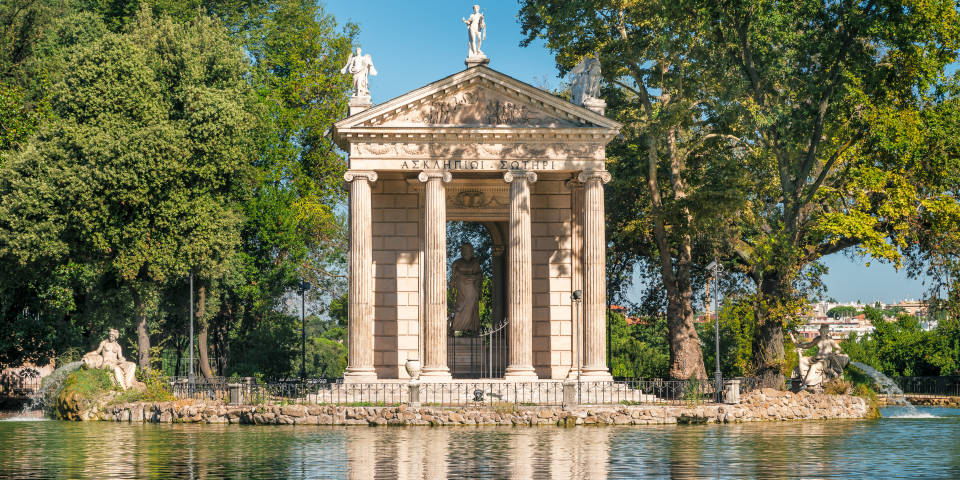
Walking through the park and around the lake is free. Boat rental, bicycles, museums, the zoo, and some temporary events cost extra, so allow at least ninety minutes for the route without paid activities.
At 184 hectares, Villa Doria Pamphilj needs more time than Villa Borghese and carries much less through-traffic from sightseeing groups. Pine avenues and open lawns lead toward the seventeenth-century Casino del Bel Respiro, designed by Alessandro Algardi with Giovanni Francesco Grimaldi. Its richly modelled exterior can be viewed from the park, while the building serves state functions and is not part of an ordinary park visit.
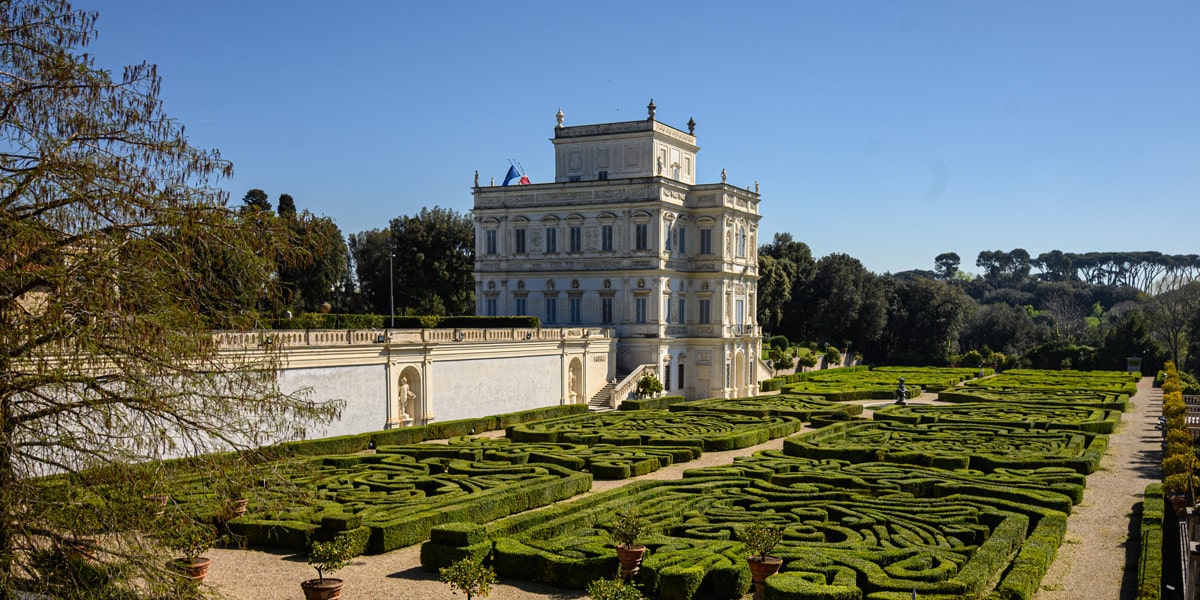
The northern side also preserves structures associated with the Trajan-Paul aqueduct. Entry to the public park is free. Choose one entrance and a defined circuit, since crossing the full estate can consume half a day.
The Janiculum, or Gianicolo, lies outside the traditional Seven Hills but gives a broad view across their domes and monuments. The ridge also forms an open-air memorial to the Roman Republic of 1849, with busts of patriots, monuments to Giuseppe and Anita Garibaldi, and Porta San Pancrazio along the promenade.
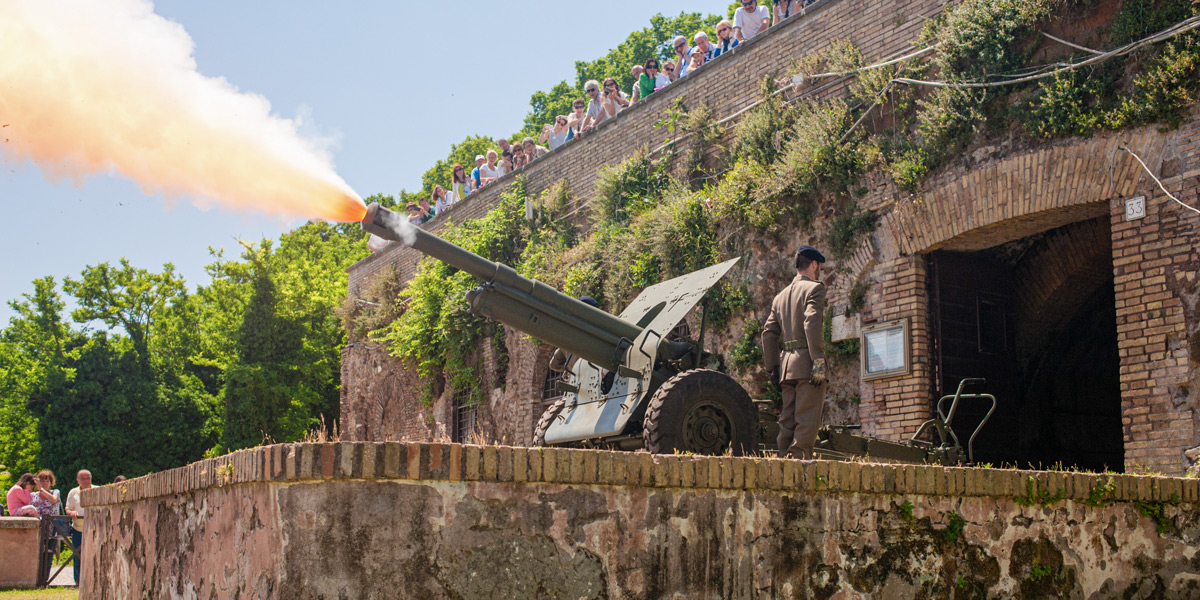
The cannon fires at noon, continuing a timekeeping tradition introduced by Pius IX in 1847. The viewpoint and cannon ceremony are free, as are the monuments. My preferred route climbs from the Vatican side, follows the ridge, then descends past Acqua Paola and San Pietro in Montorio into Trastevere.
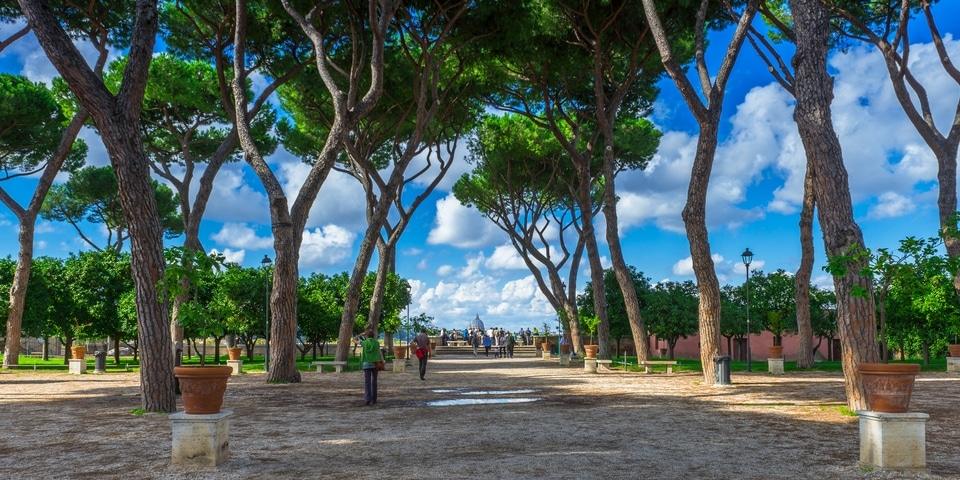
The Orange Garden, formally Parco Savello, occupies part of the medieval Savelli fortress on the Aventine. Its central avenue frames the dome of St Peter’s Basilica, while the terrace opens toward the Tiber and the western sky. Entry and the panorama are free.
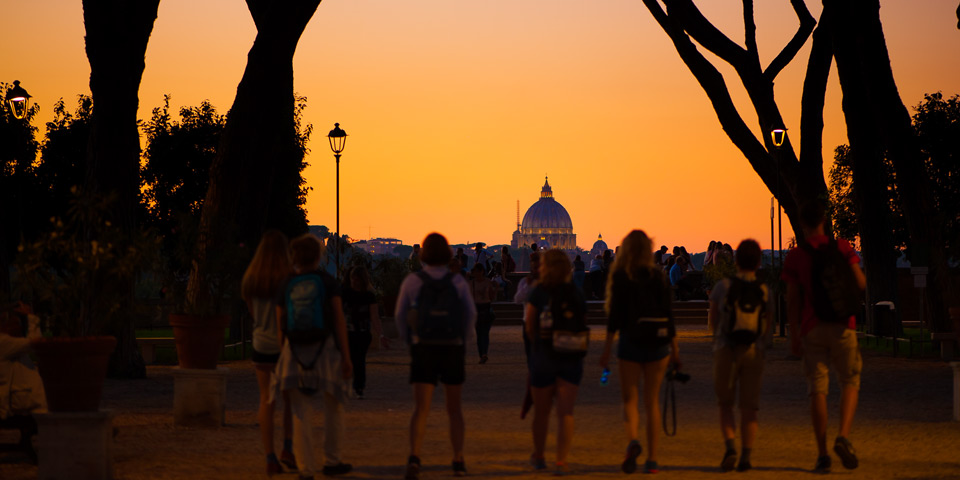
For a free evening walk, approach from the Jewish Ghetto and Teatro di Marcello, cross toward Circus Maximus, then climb the Aventine. Reach the garden before sunset rather than at the final minute, since the uphill section takes effort and closing times change with the season.
The Knights of Malta Keyhole is a few minutes uphill from the Orange Garden. Through the keyhole, clipped hedges frame St Peter’s dome at the end of a carefully controlled sightline. The view passes across territory connected with the Order of Malta, Rome, and Vatican City, which explains the popular idea of seeing three jurisdictions at once.
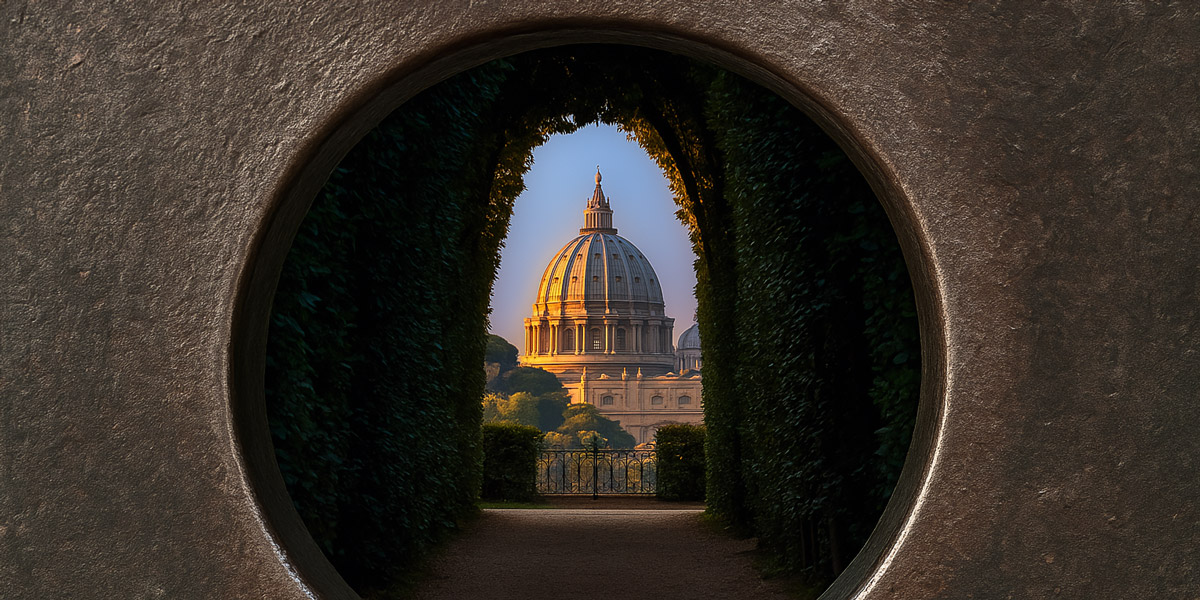
Looking through the keyhole is free. The surrounding Piazza dei Cavalieri was redesigned by Giovanni Battista Piranesi in the 1760s, so inspect the obelisks and military emblems across its elaborate portal while waiting, then keep the line moving after taking your turn.
The Appian Way began in 312 BC under the censor Appius Claudius Caecus. Beyond the city traffic, long stretches preserve basalt paving, funerary monuments, umbrella pines, and open countryside. Walking or cycling on the public road and park paths costs nothing.
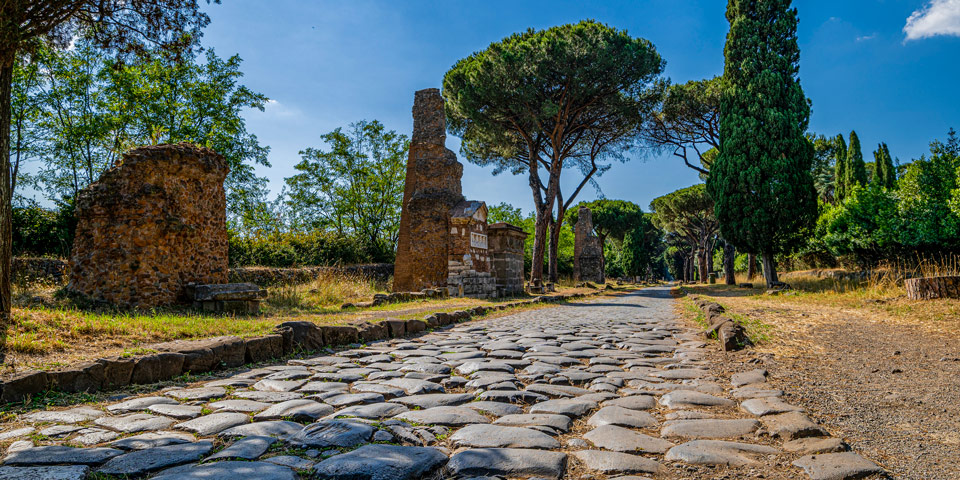
Major interiors, including catacombs and some archaeological complexes, require tickets. A free visit can focus on the road and surrounding landscape, including exterior tombs, with stronger traffic restrictions generally in force on Sundays and public holidays, subject to the park’s current mobility notices.
The Park of the Aqueducts is a free public landscape crossed by aqueduct lines from different periods. The monumental arches carried the Aqua Claudia and Anio Novus into Rome, while the late sixteenth-century Acqua Felice reused sections of the earlier system. Their overlapping routes reveal how infrastructure changed across centuries.
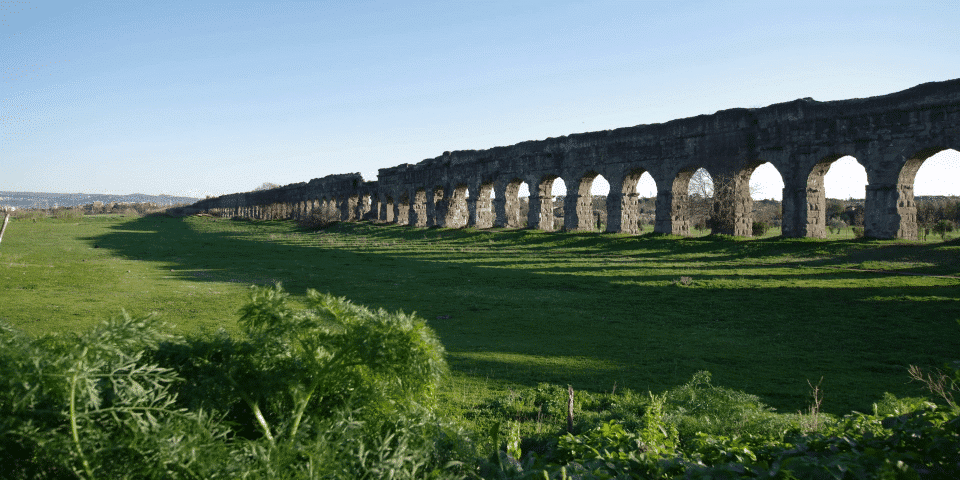
Give the park a separate half day from the Appian Way. The two landscapes belong to the same broad archaeological zone but are not adjacent stops on a casual central-Rome walk. Bring water and sun protection. Wear shoes suited to uneven or muddy paths after rain.
Several of my favorite things to do in Rome for free are complete walks rather than individual monuments. These routes show how medieval lanes and twentieth-century planning sit beside working markets and difficult wartime history. Browsing a market is free, although food and purchases are not. Neighborhood walks also work best when you choose a few precise details instead of wandering with no route.
Start a free Trastevere walk at Ponte Sisto. Continue through Piazza Trilussa and enter Santa Maria in Trastevere when services permit. The basilica’s apse holds mosaics by Pietro Cavallini that turn a neighborhood stroll into a serious art visit. Continue through the lanes around Piazza de’ Mercanti before the dinner crowd fills them.
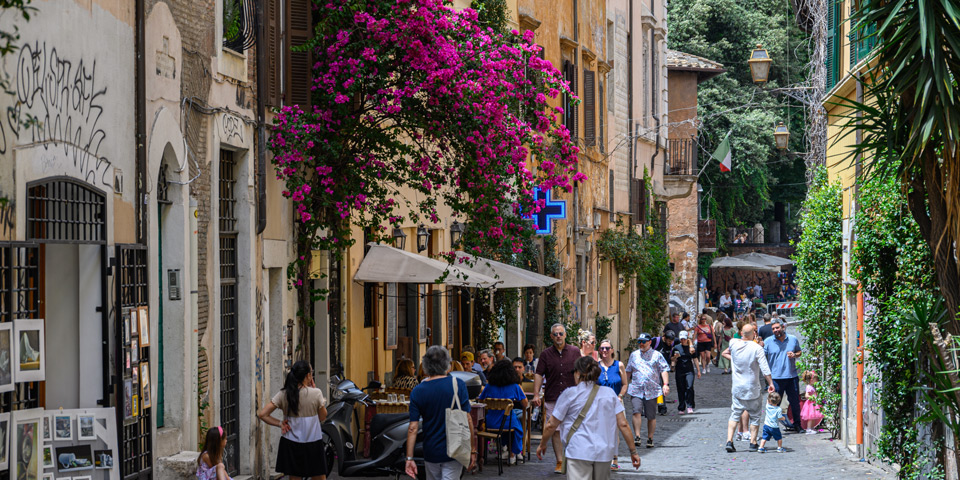
The route and church have no standard admission fee. Food and evening entertainment are separate expenses. Morning gives the best architectural view; late afternoon supplies more street life.
Begin near Largo di Torre Argentina and enter Rome’s former Jewish Ghetto through the Portico of Octavia. Augustus dedicated the ancient complex to his sister between 27 and 23 BC, while much of the visible structure belongs to a Severan restoration completed in AD 203. Continue past the Great Synagogue exterior to Teatro di Marcello, whose arcades show how a Roman theater later became part of a fortified residence.
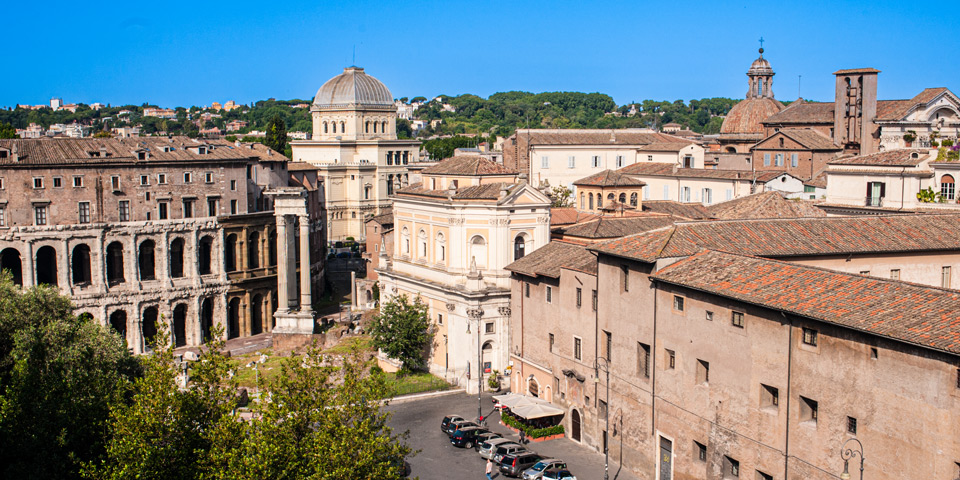
The streets and exterior monuments are free. Brass pietre d’inciampo, or stumbling stones, are set into pavements outside former homes, record individual victims of Nazi persecution, and give human scale to the history of the 16 October 1943 roundup.
Architect Gino Coppedè designed this compact district between 1915 and 1927. Enter beneath the large iron chandelier on Via Dora, then circle Piazza Mincio. The Fountain of the Frogs dates from 1924, while the Spider Palace and the House of the Fairies combine medieval references, classical fragments, Art Nouveau ornament, and playful animal motifs.
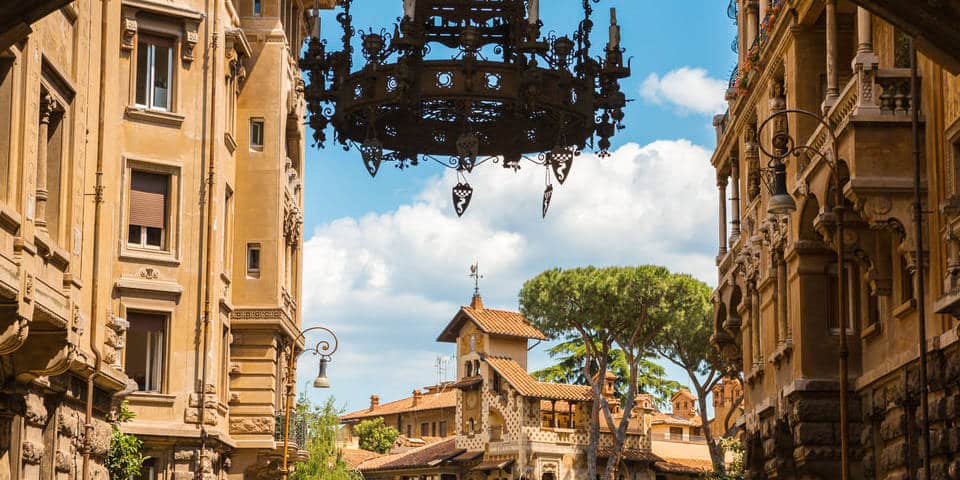
Walking the public streets is free, while the private residential buildings remain an exterior visit. Coppedè sits away from the standard central route and pairs well with Villa Torlonia or the Nomentano area rather than Trevi and Piazza Navona.
EUR was planned for the 1942 universal exposition, which World War II prevented from taking place. Its broad axes and monumental rationalist buildings offer a severe contrast with central Rome. The best-known structure is the Palazzo della Civiltà Italiana, nicknamed the Square Colosseum because rows of arches repeat across its six levels.
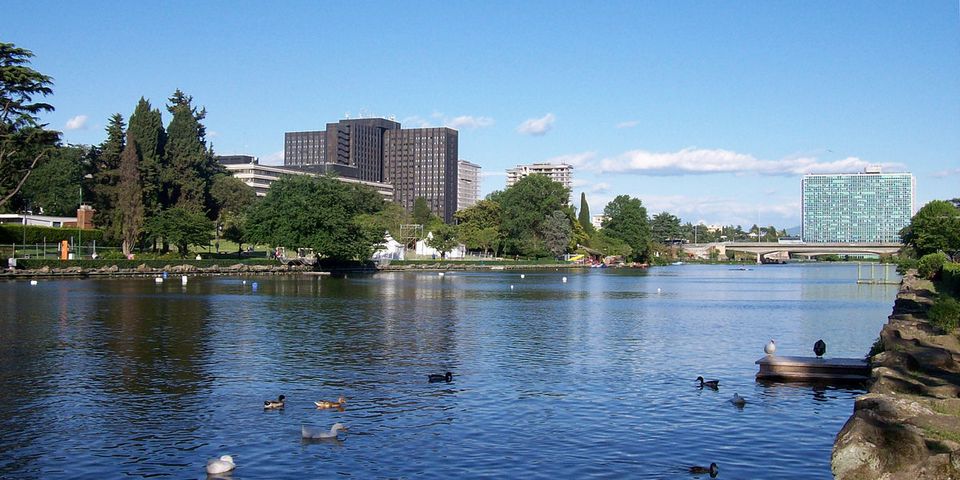
Walking through EUR and viewing the architecture from public space is free. The palace is used by Fendi, and interior access should not be assumed. Include the district when architecture or twentieth-century political history matters more to you than another Renaissance church.
Porta Portese has operated as Rome’s major Sunday flea market since the years after World War II. Stalls spread through the streets near the Trastevere railway station with used books, clothes, records, household goods, spare parts, and antiques of very mixed quality. Browsing costs nothing and reveals a commercial side of the city far removed from luxury shopping streets.
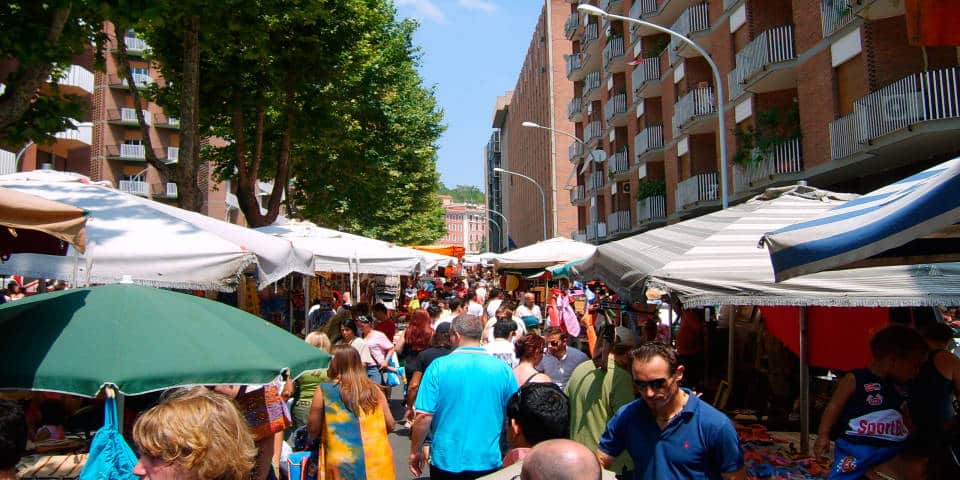
Go in the morning. Keep valuables secure in crowded aisles and inspect condition before buying. The market is an experience rather than a source of guaranteed bargains. Anything you purchase, including food, falls outside the free itinerary.
Testaccio Market is free to enter and easy to understand as part of the neighborhood’s history. Excavations below the modern hall found early imperial walls built from emptied, reused amphorae and construction levels from a later horreum, or warehouse. Nearby Monte Testaccio was formed from discarded Roman oil amphorae. The present market continues the district’s long association with storage and food distribution.
Come to observe neighborhood commerce and the archaeological windows beneath the market. Free samples should not be expected, and prepared food costs money. Combine the visit with the exterior of Monte Testaccio and the former slaughterhouse complex for a longer free walk.
The Historical Museum of the Liberation occupies apartments on Via Tasso used by the Nazi security police as a prison and headquarters during the occupation of Rome in 1943 and 1944. Cells, prisoner inscriptions, documents, and personal objects preserve testimony at the exact address where interrogations and torture took place.
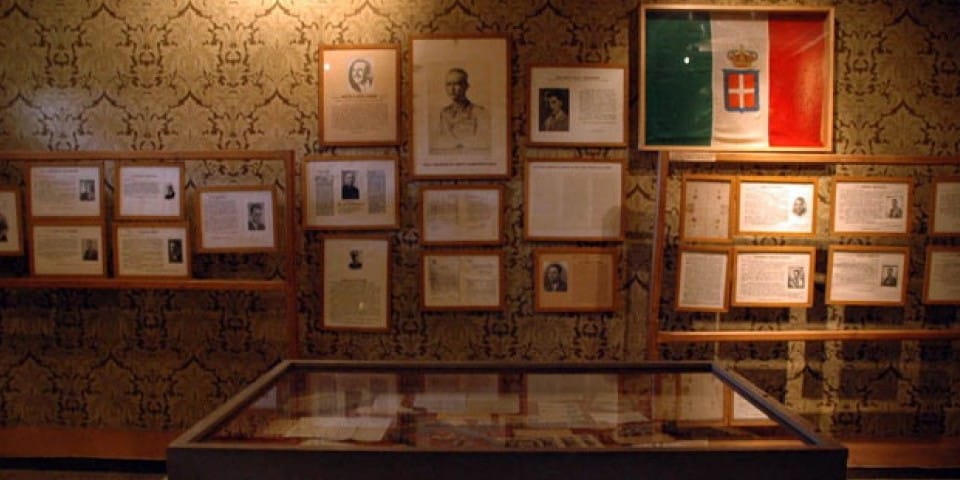
Admission is free, while donations support the institution. Check current opening arrangements before crossing the city because access periods are limited. The museum suits visitors ready for difficult history and careful reading, not a quick decorative stop between landmarks.
For a first free day, I would reach Trevi around 6 am, continue to Galleria Sciarra, the Spanish Steps, and Piazza Navona, then choose one or two churches from the list above. San Luigi dei Francesi and Sant’Agostino fit this route especially well. Continue through Largo di Torre Argentina and the Jewish Ghetto, then finish the afternoon on the Aventine.
The evening sequence runs from Teatro di Marcello past the river and Circus Maximus to the Knights of Malta Keyhole and the Orange Garden. Begin the final climb before sunset. Allow roughly ninety minutes. That leaves time for both viewpoints and a sunset panorama without paying admission.
On another day, choose one large landscape: Villa Doria Pamphilj, the Appian Way, or the Park of the Aqueducts. Trying to attach all three to a central-Rome route turns a free day into a tiring transport exercise. Villa Borghese is easier to combine with the Spanish Steps and Pincio.
Free status does not mean unrestricted access. Churches close for worship, parks follow seasonal gates, institutional courtyards can host events, and archaeological interiors often need tickets even when the exterior view is public. Check the official page for any place central to your plan, carry a refillable bottle, and keep a small amount available for transport or an unexpected closure.
Rome.us © 2026. Created with love by Roman experts and guides.