

31596 views
San Pietro in Montorio rewards visitors who take time to examine its side chapels. The church is darker than many famous Roman interiors. Give your eyes a moment to adjust, then look closely at work connected with Sebastiano del Piombo, Giorgio Vasari, Gian Lorenzo Bernini, and several of Bernini’s closest collaborators. Its position on the Janiculum also makes it an easy cultural stop between the Fontana dell’Acqua Paola and Trastevere.
The celebrated Tempietto del Bramante stands nearby and has a separate entrance through the Royal Academy of Spain. This article concentrates on San Pietro in Montorio itself and on the details that are easy to miss in its dim interior.
The present church was rebuilt from 1481 and consecrated in 1500 with support from Ferdinand II of Aragon and Isabella I of Castile. Its architect is not securely documented. Sources usually name Baccio Pontelli and Meo del Caprino, while some scholars connect the facade with Andrea Bregno’s school. The name Montorio derives from the medieval Mons Aureus, or Golden Mountain, a reference to the Janiculum’s yellow soil. Spain’s coat of arms remains on the facade, and since 1876 the adjoining convent has housed the Royal Academy of Spain.
Medieval tradition identified this site as the place of Saint Peter’s crucifixion, though modern scholarship favors the Vatican area. That belief determined the rebuilt church’s dedication and later the location of Bramante’s Tempietto. Inside, a single nave is lined by five chapels on each side. That simple plan works well for a slow visit because each chapel can be read as a self-contained work.
The church also preserves an unexpected chapter of Irish history. Hugh O’Neill, Earl of Tyrone, and Rory O’Donnell, Earl of Tyrconnell, left Ireland during the Flight of the Earls in 1607 and later reached Rome. Both were buried in a vault at San Pietro in Montorio.
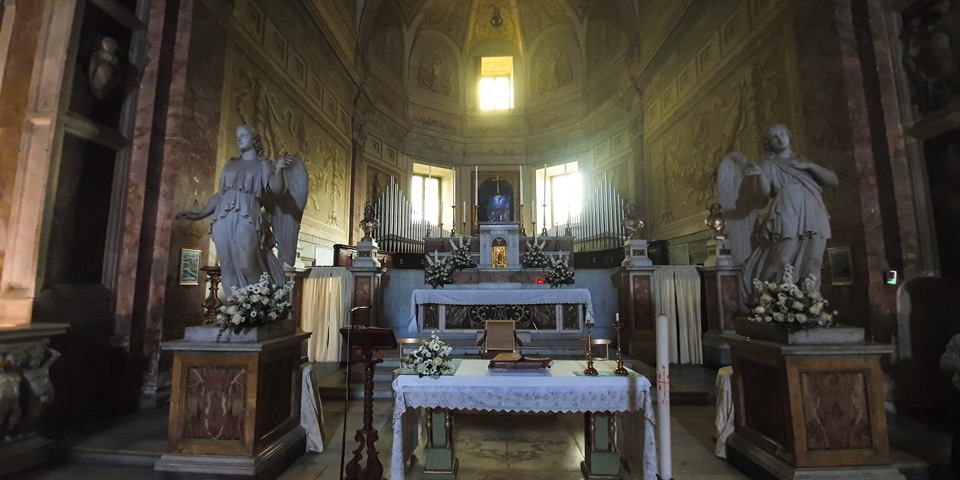
The high altar no longer displays the painting for which this part of the church was once famous. Raphael’s Transfiguration was installed here after the artist’s death in 1520, then seized by the French under the Treaty of Tolentino in 1797. When the painting returned from Paris in 1816, it entered the Vatican collections instead of coming back to the church. It is now displayed in the Vatican Pinacoteca.
The present altarpiece is Vincenzo Camuccini’s copy, painted around 1825, of Guido Reni’s Crucifixion of Saint Peter. Reni’s original is also in the Vatican Pinacoteca.
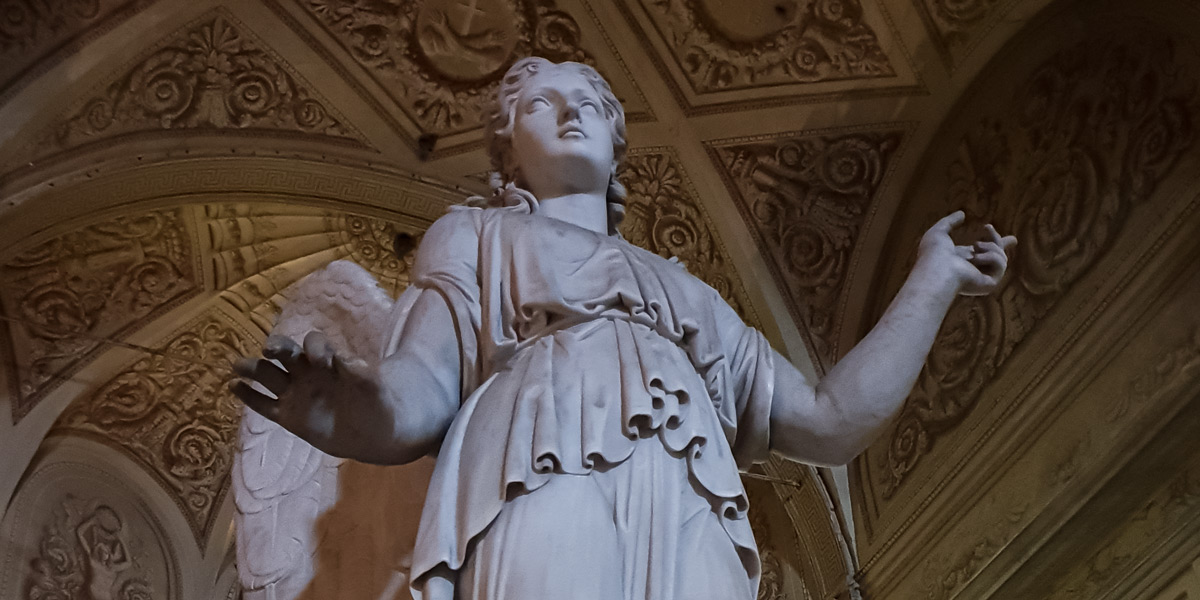
Two monumental marble angels from the nineteenth century frame the sanctuary. Their pale surfaces catch the limited light and make them easier to see than the reliefs on the apse walls. They also show why the interior should be viewed from more than one position: details that disappear from the nave become clear when approached from the side.
Enter the chapel nearest the entrance on the right to see Sebastiano del Piombo’s Flagellation of Christ, accompanied by Saints Peter and Francis. Michelangelo supplied drawings for parts of the composition, which helps explain the weight and physical presence of the figures. Look above it as well: the conch presents the Transfiguration, echoing the subject of Raphael’s former high-altarpiece.
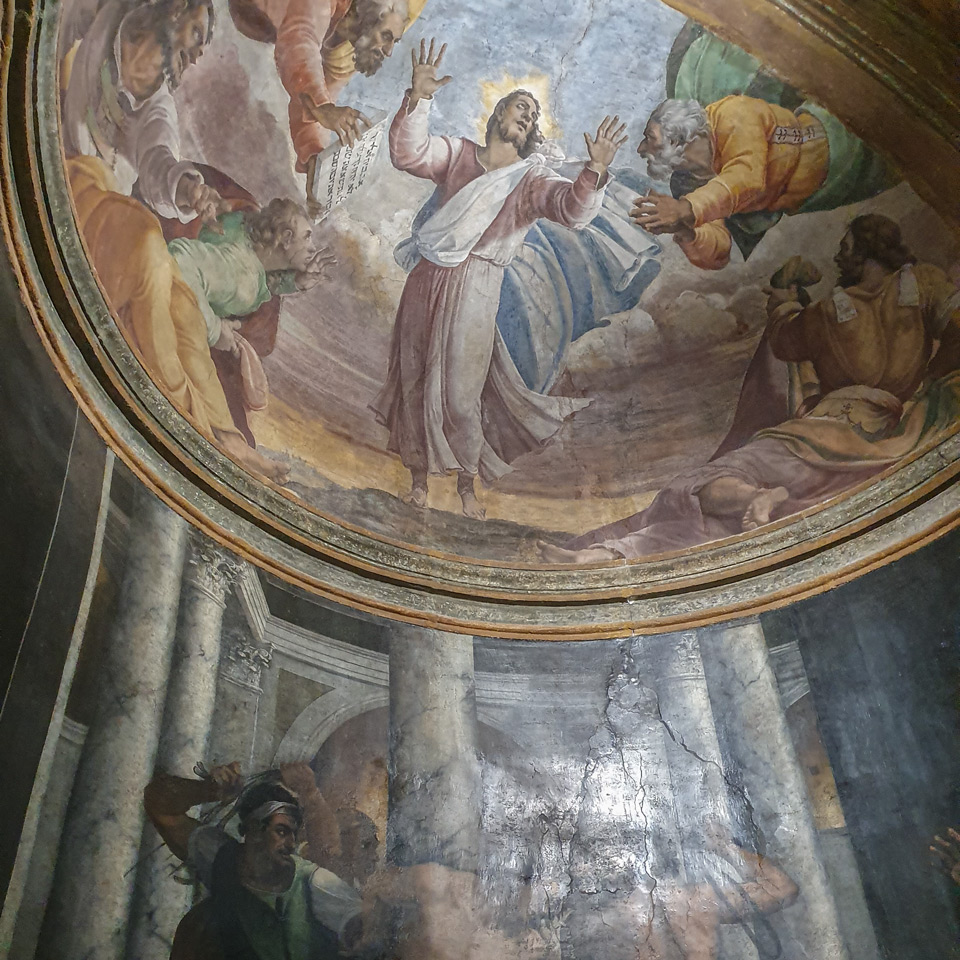
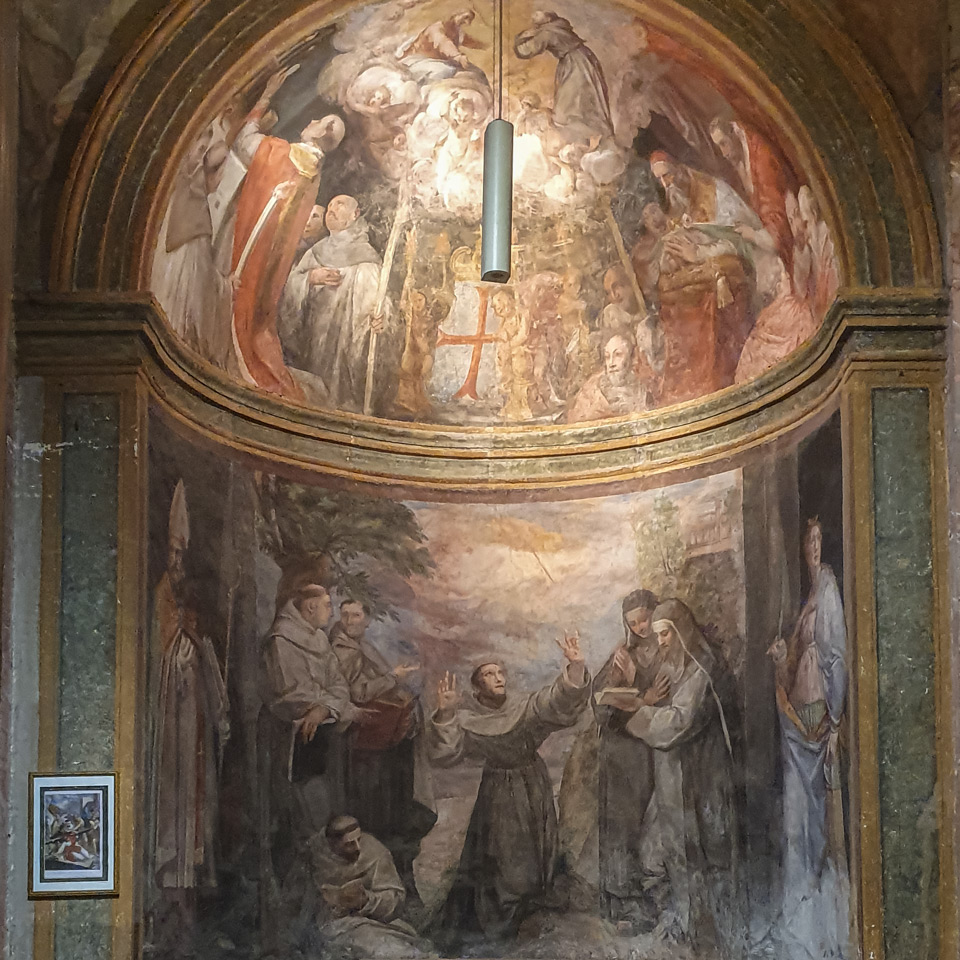
Across the nave, Giovanni de’ Vecchi’s work fills the chapel nearest the entrance on the left. The central image, painted around 1594, shows the Stigmata of Saint Francis. According to Franciscan tradition, the saint received wounds corresponding to those of the crucified Christ. Above, the funeral of Cardinal Clemente Dolera shifts the chapel from miraculous vision to commemoration.
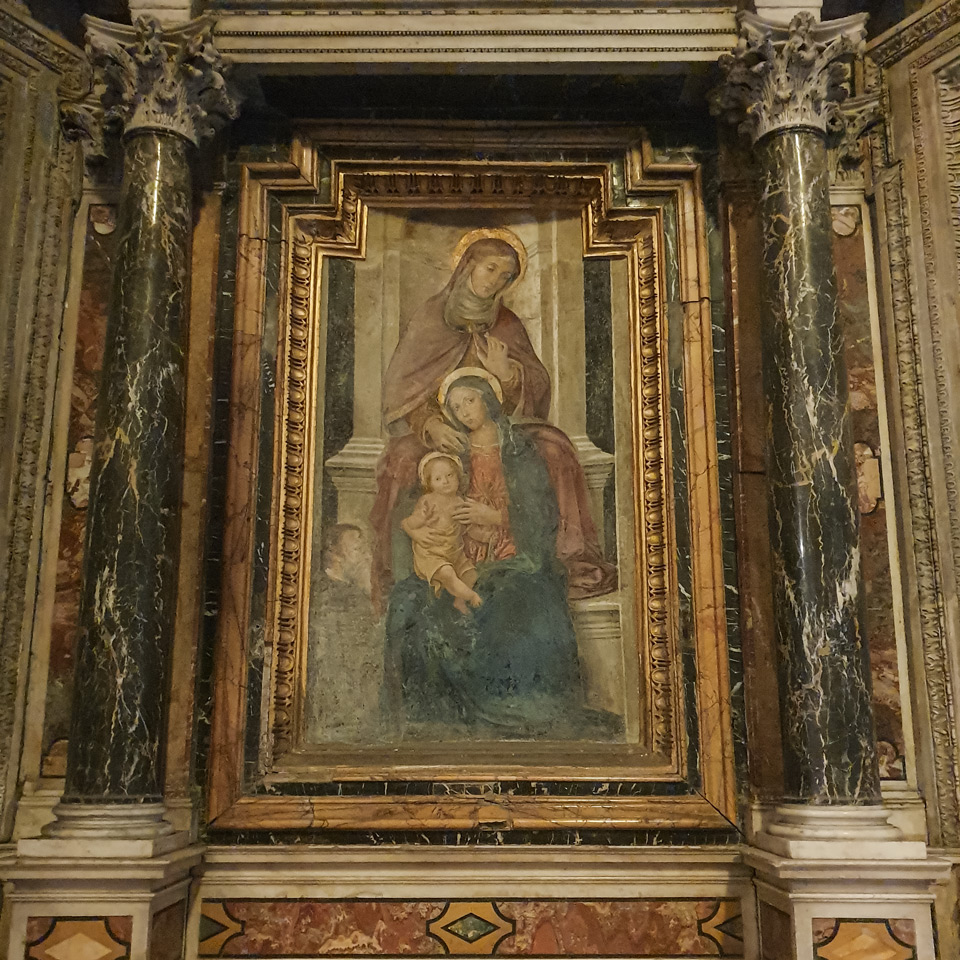
Another chapel preserves a tender image of Saint Anne, the Virgin Mary, and the Christ Child, attributed to a painter from the circle of Antoniazzo Romano. The three figures represent three generations: Anne stands behind her daughter Mary, who supports the infant Jesus. By placing all three generations in one image, the composition makes Christ’s human ancestry visible.
Giorgio Vasari’s Conversion of Saint Paul dominates the next chapel, where Saul falls beneath divine light as a horse and the surrounding figures crowd the scene. Funeral monuments for Antonio and Fabiano del Monte occupy the same space, with allegorical figures of Justice and Religion by Bartolomeo Ammannati.
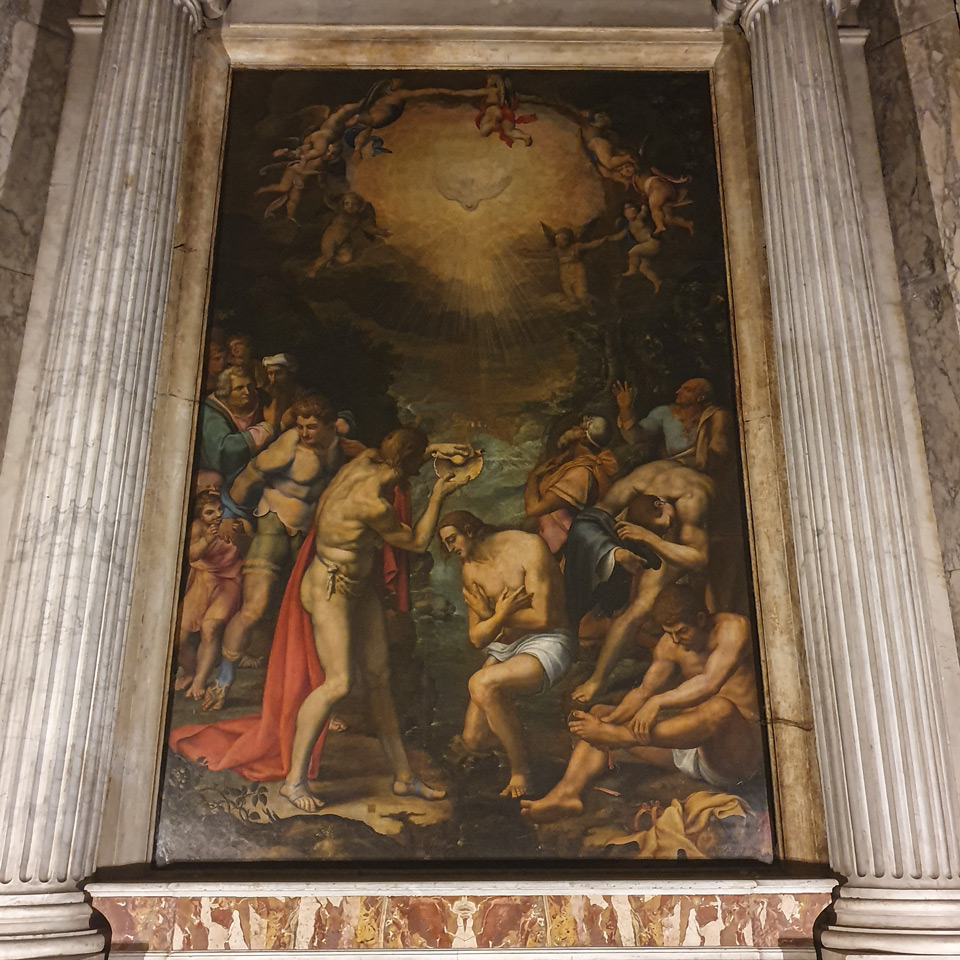
Directly opposite Vasari’s chapel, the Ricci Chapel was designed by Daniele da Volterra. Its 1568 Baptism of Christ is usually assigned today to Giulio Mazzoni, who completed the chapel’s painted and stucco decoration after Daniele’s death. Older guides attribute the altarpiece to Daniele himself, so its authorship should not be treated as certain. John the Baptist pours water from a shell onto Christ’s head while the dove of the Holy Spirit appears in the light above.
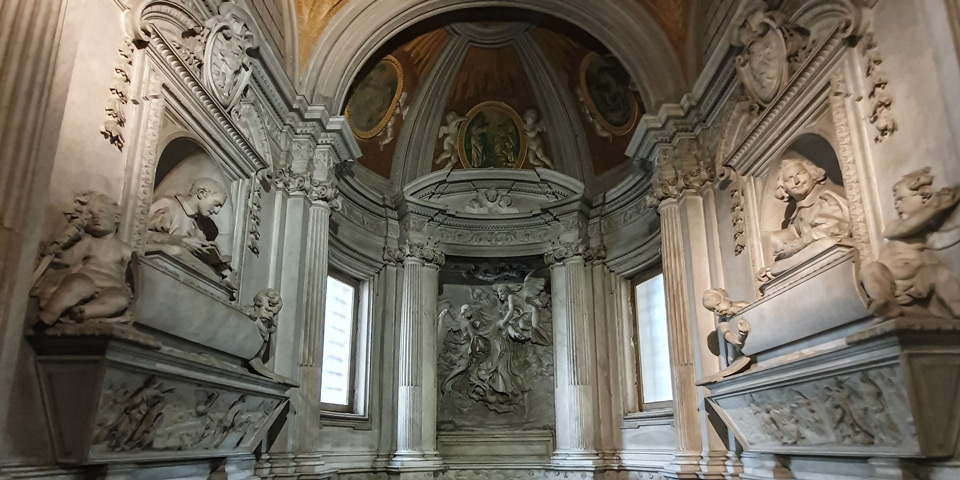
The second chapel on the left contains the church’s most concentrated Baroque ensemble. Gian Lorenzo Bernini designed the architectural setting around 1640. Sculptors and painters from his circle continued working on its decoration through the following decade.
Look up before approaching the altar. Around 1650, Guidobaldo Abbatini painted Saint Francis raised in glory among angels across the vault. The brown habit and knotted cord identify the saint even before the surrounding scenes are understood.
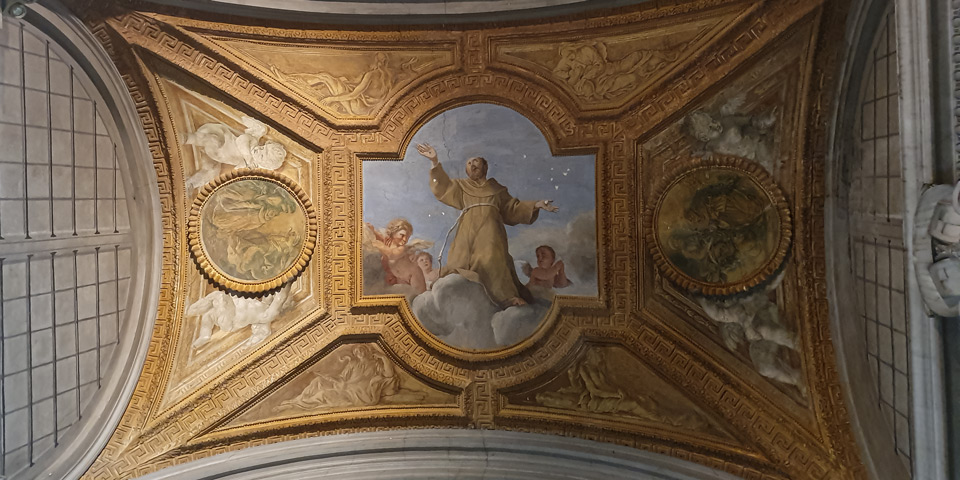
Bernini treated the narrow chapel like a small theatre. Two side windows direct light toward the altar, while the tombs of the Raimondi family face the sacred scene from opposite walls. Architecture, sculpture, and daylight therefore work together. The figures seem to witness the altar relief along with the visitor.
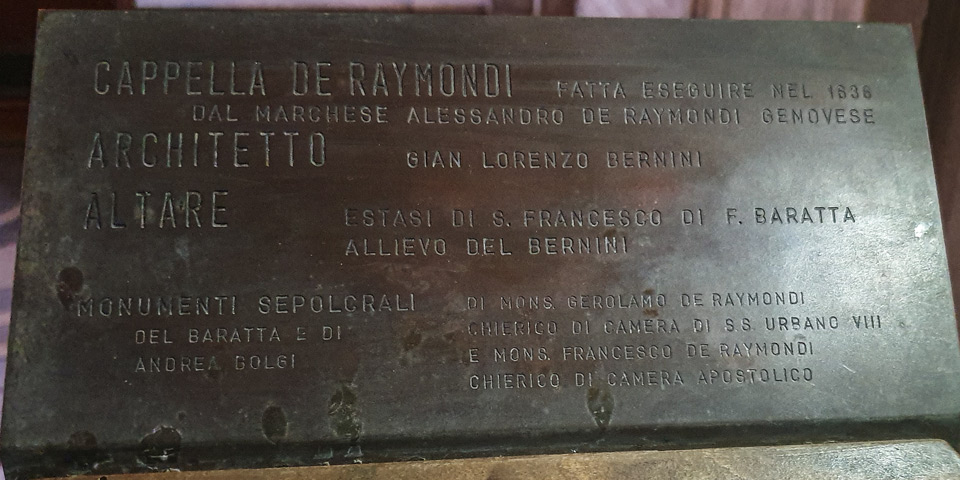
The old identification plaque names Bernini as architect and Francesco Baratta as sculptor of the altar relief. Its attribution of the funerary monuments is too broad. Andrea Bolgi carved the portrait busts and putti, while Niccolò Sale executed the narrative reliefs below.
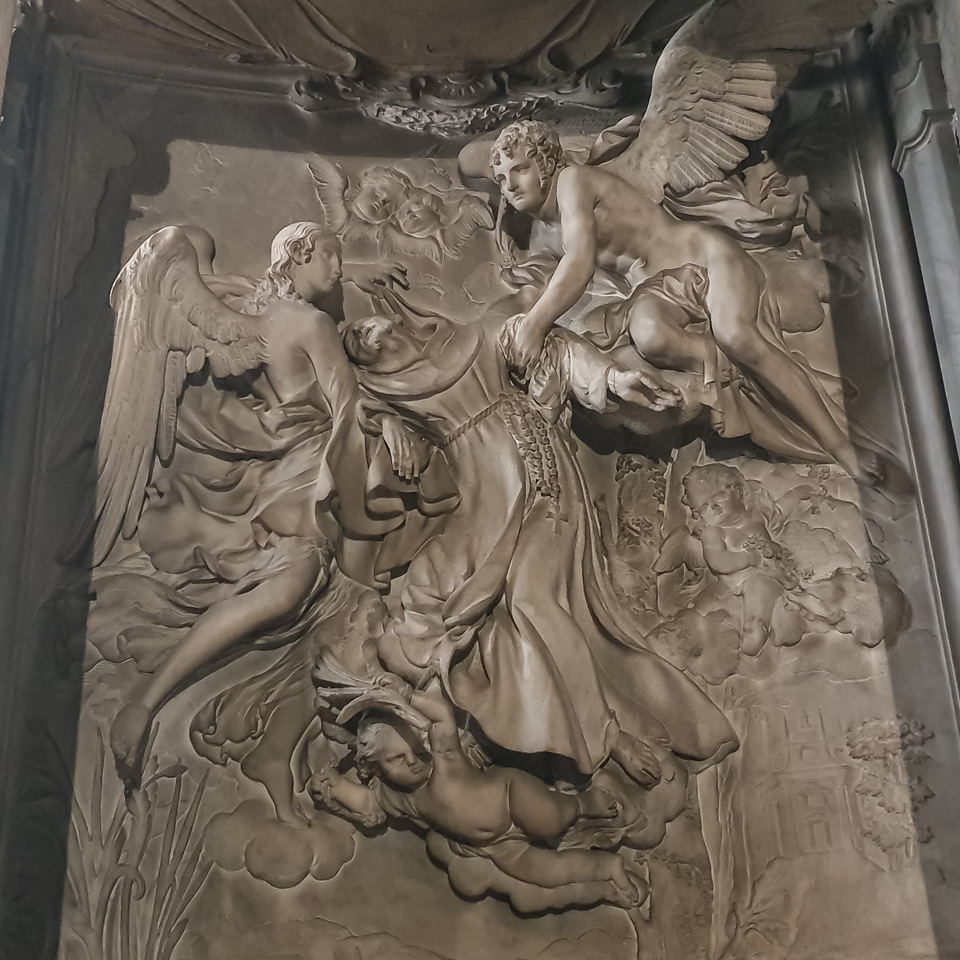
At the center, Francesco Baratta’s marble relief, completed around 1650, represents the Ecstasy of Saint Francis. Angels lift the saint as his body slackens in spiritual rapture. The knotted cord at his waist and the rosary help identify him as Francis of Assisi. Baratta cut some figures in deeper relief while others barely emerge from the background. The changing depth creates a convincing sense of distance within the chapel’s shallow space.
The monument on the right commemorates Monsignor Girolamo Raimondi. His swept hair and small pointed beard distinguish the portrait, while putti lean across the marble frame.
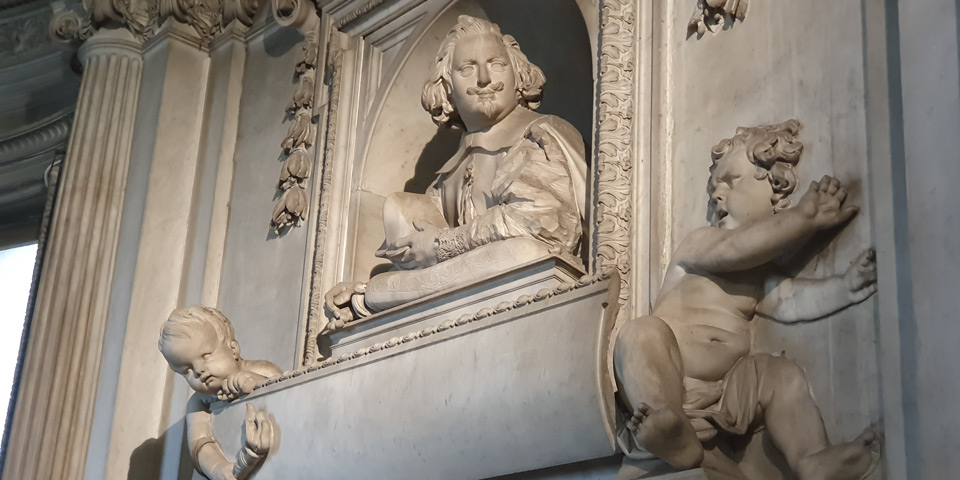
Across the chapel, Monsignor Francesco Raimondi looks down at an open book. Beneath his portrait, the sarcophagus carries a narrative relief by Niccolò Sale. The informal poses make both men appear present rather than sealed into formal memorials.
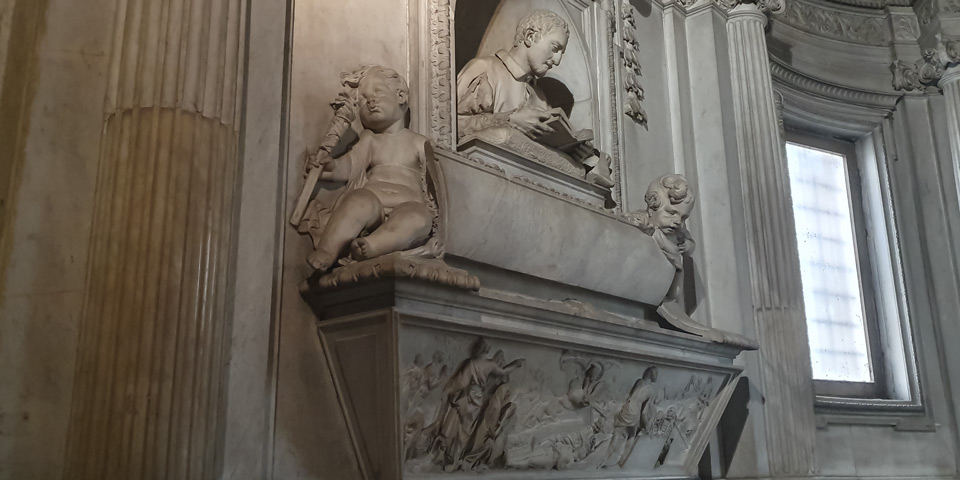
The chapel can be surveyed from a single position. Before leaving, move to each side and watch how the windows illuminate the relief. From those angles, the two deceased churchmen appear as permanent spectators.
Guidebooks often group San Pietro in Montorio with Bramante’s Tempietto. The two sites share a religious history and occupy the same larger complex. Visitors enter them separately. Enter the church from Piazza di San Pietro in Montorio. To see the Tempietto, use the entrance to the Royal Academy of Spain and cross its courtyard.
Combining both places makes sense, especially while walking from the Acqua Paola toward Trastevere. Allow the church its own short visit first. The Tempietto explains the Renaissance ideal of perfect geometry; San Pietro in Montorio shows how Roman chapels accumulated painting, sculpture, family memory, and changing devotional practice over several centuries.
Rome.us © 2026. Created with love by Roman experts and guides.