
30062 views
Written by: Kate Zusmann
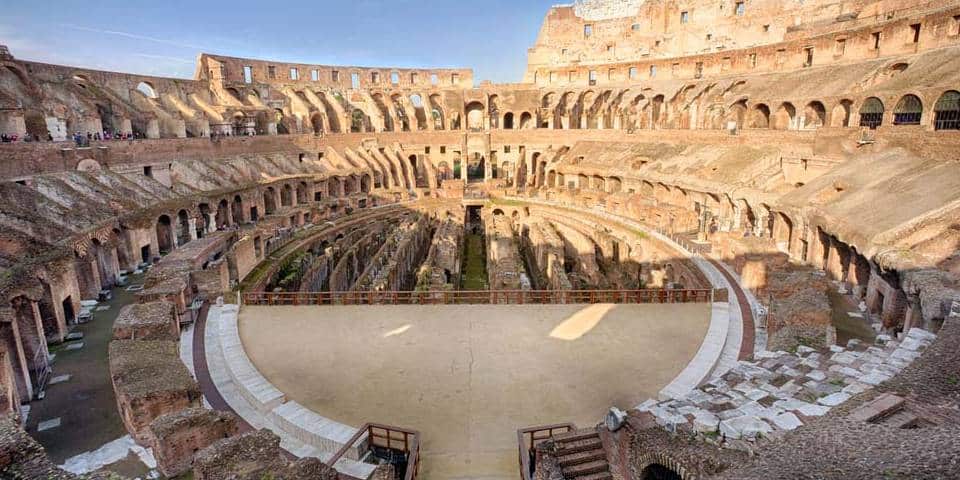
The Colosseum is considered a modern “Wonder of the World” because it combines spectacular Roman engineering with an unmatched cultural impact. Built in the 1st century AD (completed under the Flavian emperors), it became the empire’s greatest stage for public entertainment—and it still defines Rome’s skyline nearly 2,000 years later.
It is the largest ancient amphitheater ever built, designed to host roughly 50,000–80,000 spectators with remarkably efficient crowd flow.
What made it extraordinary was not only its size, but its construction system. The exterior’s stacked arches and the interior’s vaulted corridors worked like a machine for people: numbered entrances, ring-shaped passageways, and tiered seating allowed enormous crowds to enter and exit quickly. Beneath the arena, a complex service level (the hypogeum) supported trapdoors, lifts, and staging that could deliver animals and scenery into the action with theatrical speed.
The Colosseum is also famous for the events it hosted. Gladiatorial combats became its best-known spectacles, but the program was broader: animal hunts (venationes), staged punishments, and elaborate public shows. Ancient historian Cassius Dio wrote that more than 9,000 wild and domesticated animals were killed during the inaugural celebrations, which reportedly lasted 100 days—an example of the scale (and brutality) that helped cement the amphitheater’s legend.
Today, the Colosseum stands as a symbol of Roman power, design, and mass culture—and that enduring legacy is why it was voted one of the New 7 Wonders of the World in 2007. For more quick, shareable highlights, see these interesting Colosseum facts.
Rome.us © 2026. Created with love by Roman experts and guides.