
Rome.us
  • TAXI FARES CALCULATOR
  • BOOK PRIVATE TOUR
  • ABOUT US
  • HOW TO GET
    • Fiumicino Airport
    • Ciampino Airport
    • Termini Railway Station
    • Public Transport
    • To Venice
    • To Florence
    • To Ostia Antica
    • To Naples
    • To Milan
    • To Pisa
    • To Siena
  • TIPS
    • TOP Attractions
    • Tickets to Vatican museums
    • Rome Three Day Itinerary
    • Rainy Days in Rome
    • Buying a Sim Card in Italy
    • Renting a Car in Rome
    • Apps for Tourists
    • Free Things to Do
    • Unusual Things to do
    • ASK US
    • Instagram
    • Pinterest
  • ANCIENT SITES
    • Castel Sant’Angelo
    • Colosseum
    • Pantheon
    • Roman Forum
  • WHERE TO STAY
    • How to Choose a Hotel in Rome
    • Hotels with Best Views
    • Hotels near Termini
    • Hotels near the Colloseum
    • Best Hostels
    • Hotels near Navona Square
    • 3 Star Hotels
    • 4 Star Hotels
    • 5 Star Hotels
    • Apartments For Rent
  • VATICAN CITY
    • St Peter’s Basilica
    • Sistine Chapel
    • Vatican Museums
    • Raphael’s Rooms
    • Michelangelo’s Pieta
    • St Peters Dome
    • St Peter’s Square
    • Vatican Military
    • Swiss Guard
    • Pilgrims of Hope Jubilee
  • MUSEUMS
    • Ara Pacis Augustae
    • Borghese Gallery
    • Capitoline Museums
    • Caravaggio’s Paintings
    • Great Synagogue
    • Palazzo Farnese
    • Spada Gallery
  • PARKS
    • Appian Way
    • Orange Garden
    • Park of the Aqueducts
    • Pincio Terrace
    • Villa Ada
    • Vatican Gardens
    • Villa Borghese
    • Villa Celimontana
    • Villa Torlonia
    • Zoo
  • CHURCHES
    • Capuchin Crypt
    • Holy Stairs
    • Sant’Agnese in Agone
    • San Giovanni in Laterano
    • Santa Maria Maggiore
    • Saint Paul Outside the Walls
    • St Peter in Chains
    • St. Ignatius of Loyola
  • FOUNTAINS & SQUARES
    • Navona Square
    • Spanish Steps
    • Trevi Fountain
    • Altar of The Fatherland
    • Fontana della Barcaccia
    • Fountain of the 4 Rivers
    • Fountain of the Pantheon
    • Piazza del Popolo
    • Piazza Venezia
    • Turtle Fountain
    • Triton Fountain
  • HILLS
    • Aventine
    • Capitoline
    • Janiculum
    • Palatine
    • Pincian
  • DAY TRIPS
    • To Tivoli
    • To Ostia Antica
    • Beaches near Rome
    • To Alberobello
  • WEATHER
    • January
    • February
    • March
    • April
    • May
    • June
    • July
    • August
    • September
    • October
    • November
    • December
  • WHERE TO EAT
    • Famous Roman Dishes
    • Best Pizza Places
    • Best Pasta Places
    • Local Italian Food
    • Best Gelato Places
    • Best Rooftop Bars
  • NEIGHBORHOODS
    • Campo Marzio
    • Jewish Ghetto Quarters
    • Quartiere Coppedè
    • Monti
    • Sant’Eustachio
    • Trastevere
    • Trevi
  • Shopping
    • Castel Romano Outlet
    • Farmers Markets
    • Souvenirs from Rome
  • EMPERORS
    • Good Emperors
    • Marcus Aurelius
    • Gaius Julius Caesar
    • Nero
    • Octavian Augustus
    • Caligula
    • Hadrian
    • Vespasian
    • Commodus
    • Trajan
Home / Information About Rome – FAQ /

What material is the Colosseum made of?

Written by: Kate Zusmann

material of colosseum

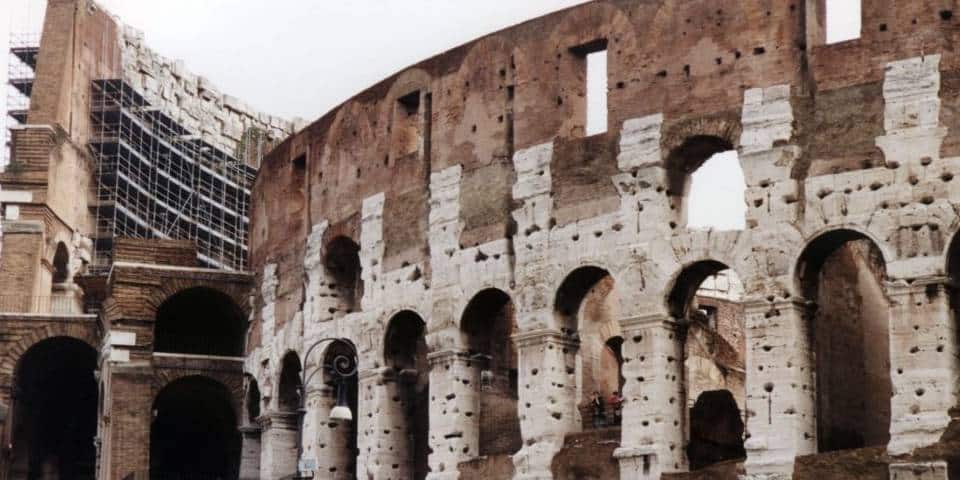
The Colosseum (Colosseo) was built from Roman Travertine, which is a form of limestone deposited by mineral springs, mostly from hot springs. The material is from Tivoli, and it exists in white, tan, and cream-colored varieties. Moreover, it is formed during the process of precipitation of calcium carbonate and is frequently used in Italy as a building material. After the Great Jewish Revolt in 70 AD, around 100.000 Jewish prisoners were working on the massive construction. The slaves undertook manual labor. For instance, they transported stone 20 miles from Tivoli to Rome. Along with them, teams of professional Roman engineers, painters, builders, and decorators worked on the construction.

The Flavian Amphitheater constructed with wood, limestone, cement, mortar, and tuff materials

Also, the famous Marcellus theater was built from the travertine. You can find out its modern providers here and here. Also, around the exterior of the Colosseum run three orders of arches: Doric, Ionian, and Corinthian, and the fourth floor with Corinthian pilasters. There are 80 arches that create the elliptical ring, where four of them correspond to the entrance of honor reserved for the Emperor’s remains.

Read also why today the Colosseum has holes?

Author: Kate Zusmann

Kate Zusmann

I have lived in the Eternal City for the past 12 years. They say every angle of Rome has its history, and I'm here to tell you about the most intriguing historical facts and city legends. :)

Dive Deeper into Rome's Stories

Fiumicino Airport Terminal 3

25225 views

How to Get from Fiumicino Airport to Rome City Center

Visiting Sistine Chapel

936244 views

Sistine Chapel

The Borghese Gallery and Museum The Ultimate Guide for Visitors

16198 views

The Borghese Gallery and Museum

Vatican Museums Guide

991922 views

The Vatican Museums

The Colosseum

141864 views

Colosseum

Visiting Pantheon in Rome

34876 views

Pantheon

Roman Forum in Rome Italy

46480 views

Roman Forum – Ultimate Guide for Antic History Lovers

What to See in Rome

35787 views

What to See in Rome – TOP 30 Tourist Attractions & Places

Hotels with best views in Rome

16198 views

Hotels with Best Views in Rome

Show more

About us

About us ROME.US Authors Kate Zusmann and Artur Jakucewicz
We're Kate and Artur, a duo bound by our shared fascination with the Eternal City – Rome. Our paths, driven by a mutual passion for its timeless stories and architectural marvels, converged in a way we had never imagined.

Explore Rome

  • Triton Fountain by Bernini

  • Fontana di Trevi Rome Italy

    Trevi Fountain

  • best pizza places in rome

    The 10 Best Pizza Places in Rome

  • campus martius

    Field of Mars in Rome (Campus Martius)

  • Capitoline Museums in Rome

    Capitoline Museums

Rome.us
  • social logo
  • social logo
  • social logo
  • social logo

This website uses cookies. For more info read the cookies policy

Rome.us © 2026. Created with love by Roman experts and guides.