
28072 views
Written by: Kate Zusmann
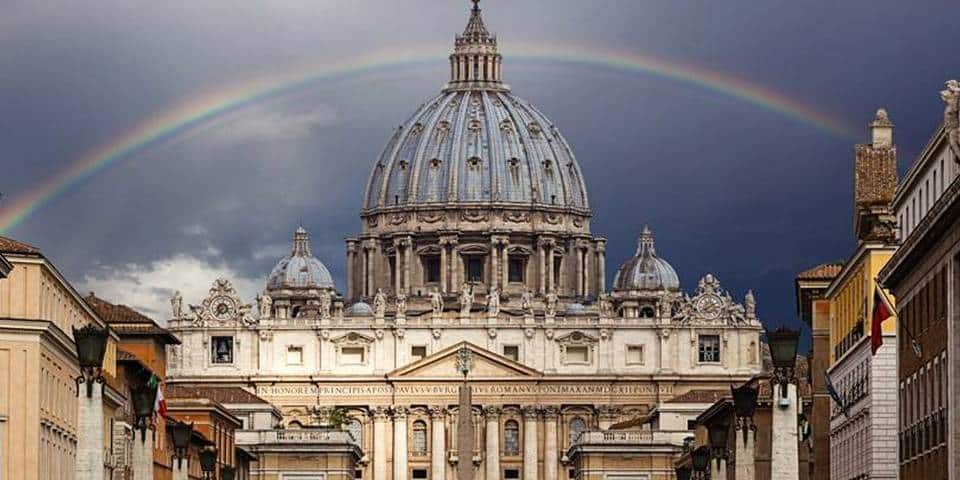
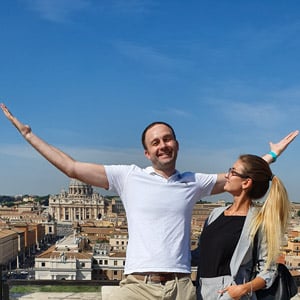
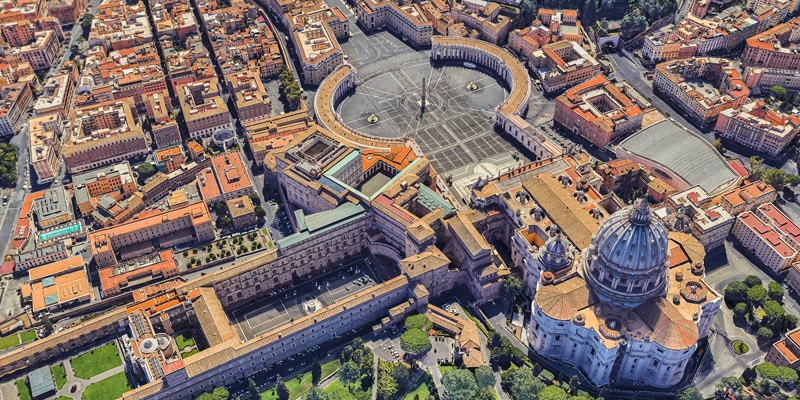
Vatican City (Stato della Città del Vaticano) is a fully independent city-state enclaved within Rome, Italy. It sits on Vatican Hill on the west bank of the Tiber River, just beyond the historic center. Its main entrance area opens onto St. Peter’s Square, with the surrounding Roman neighborhoods of Borgo and Prati forming much of the immediate “outside-the-walls” setting.
Nearby, you’ll find Castel Sant’Angelo and, across the river, the Trastevere district. From St. Peter’s Square, you can also walk along Via della Conciliazione toward the river and the bridge approaches that connect the Vatican area to central Rome.
The Vatican is the smallest fully independent nation-state in the world.
This location matters historically. In antiquity, Vatican Hill lay outside Rome’s main urban core, and the area included a necropolis. Early Christian tradition holds that Saint Peter was martyred during the persecutions under Emperor Nero and buried nearby. In the 4th century, Constantine built the first St. Peter’s Basilica over what was believed to be Peter’s tomb, anchoring the Vatican’s significance to this specific hillside.
Modern Vatican City, however, is a 20th-century state. It became a sovereign territory in 1929 under the Lateran Treaty. Today it operates its own institutions and services, including its own legal system, postal service, media, and administrative bodies. It also issues passports under specific conditions tied to official duties.
How to get there (quick guide):
Rome.us © 2026. Created with love by Roman experts and guides.